We cannot afford wage restraint!
Only if incomes rise can purchasing power and thus consumption be strengthened. Especially in the low-wage sector, real wage increases are needed so that people can continue to afford daily life.
KV Autumn

Starting situation
Austria's economy is increasingly recovering from a period of weakness. In August 2025, inflation in Germany rose to 4.1 percent – well above the average of 2.1 percent in the eurozone. The research institutes WIFO and IHS estimate annual inflation at 2.9 percent. The tourism industry in particular continues to act as an inflation driver. The so-called Austrian surcharge, but also the passing on of costs to consumers, also led to price increases of 5 percent for food.
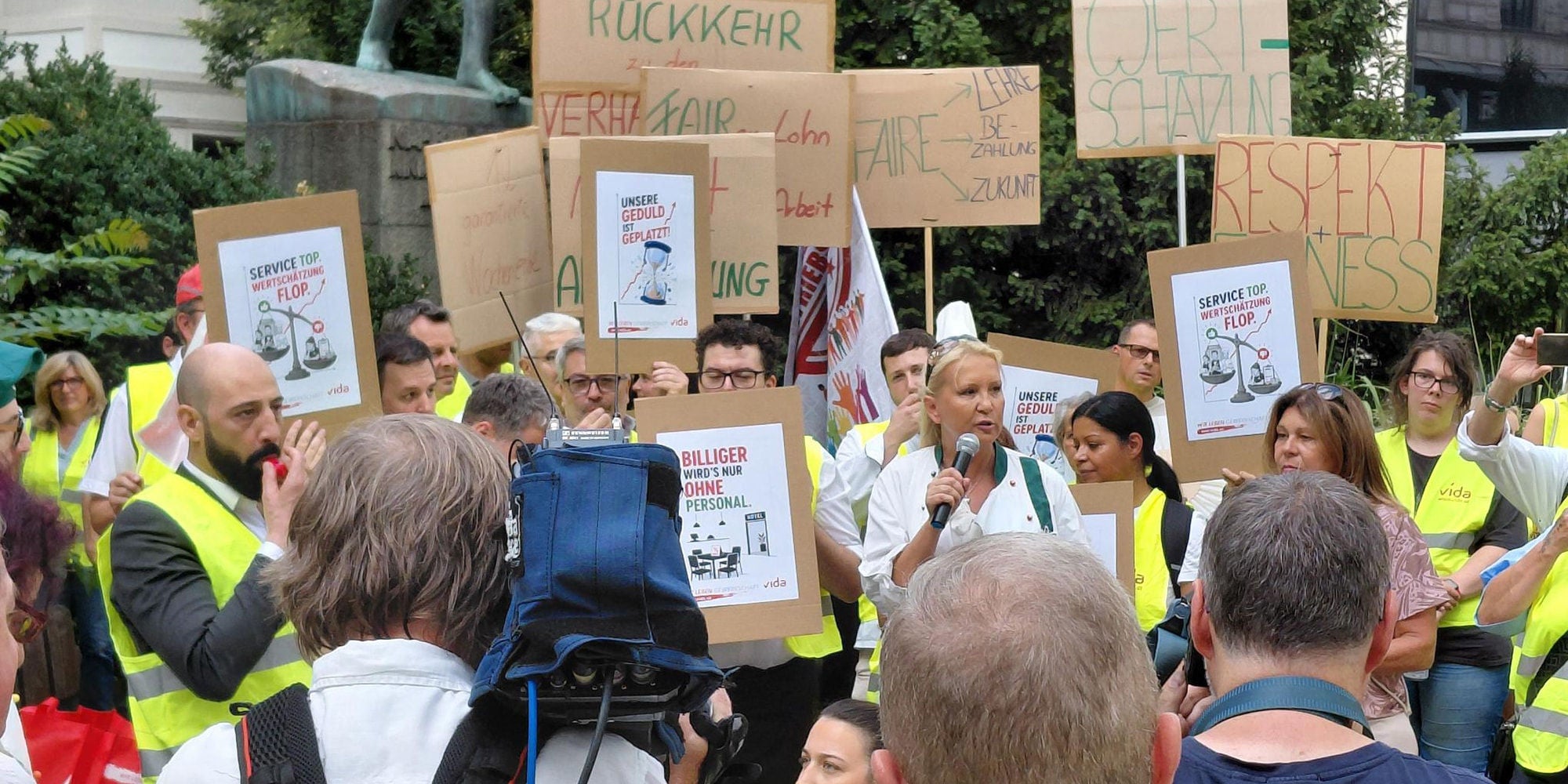
Press conference
September 25, 2025 09:30:30

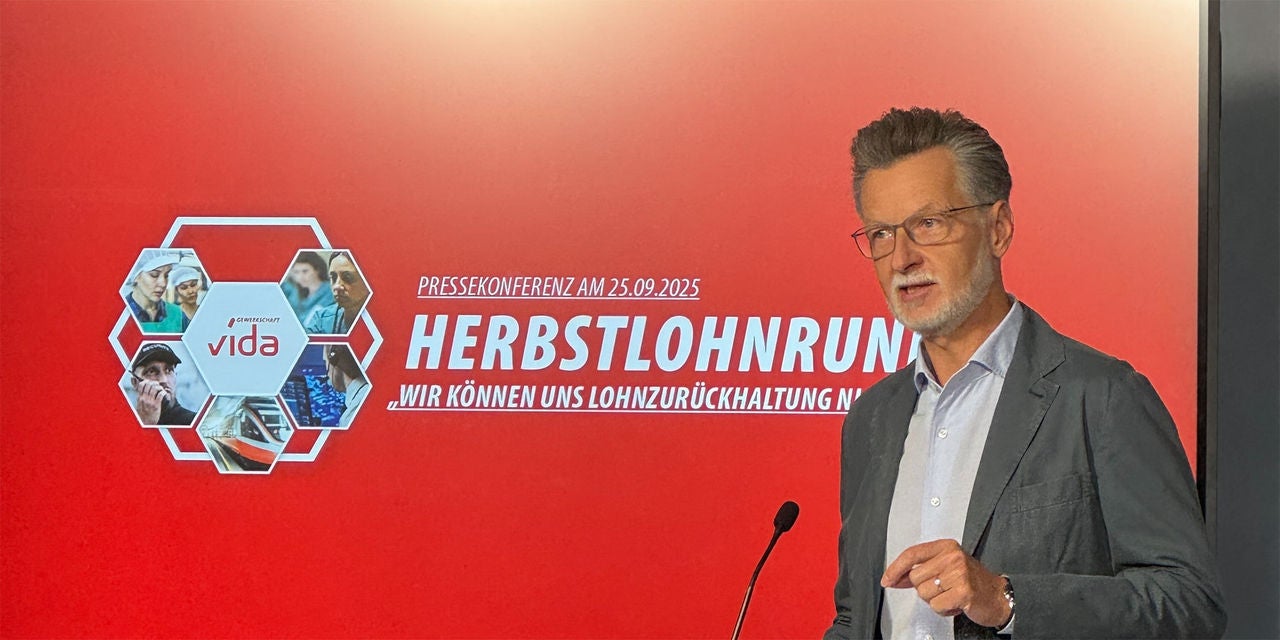
On the basis of the collective agreement negotiations for the professional groups railways, air traffic control, commercial workers, guarding, and religious hospitals of Upper Austria , the importance of the service sector for the country is emphasized and why wage restraint is not the solution to the economic crisis and how increased personnel requirements threaten security of supply.
- Time: Thursday, September 25, 2025, 09:30 a.m.
- Location: ÖGB Zentrale Catamaran, Johann-Böhm-Platz 1, 1020 Vienna, "Riverbox", 10th floor
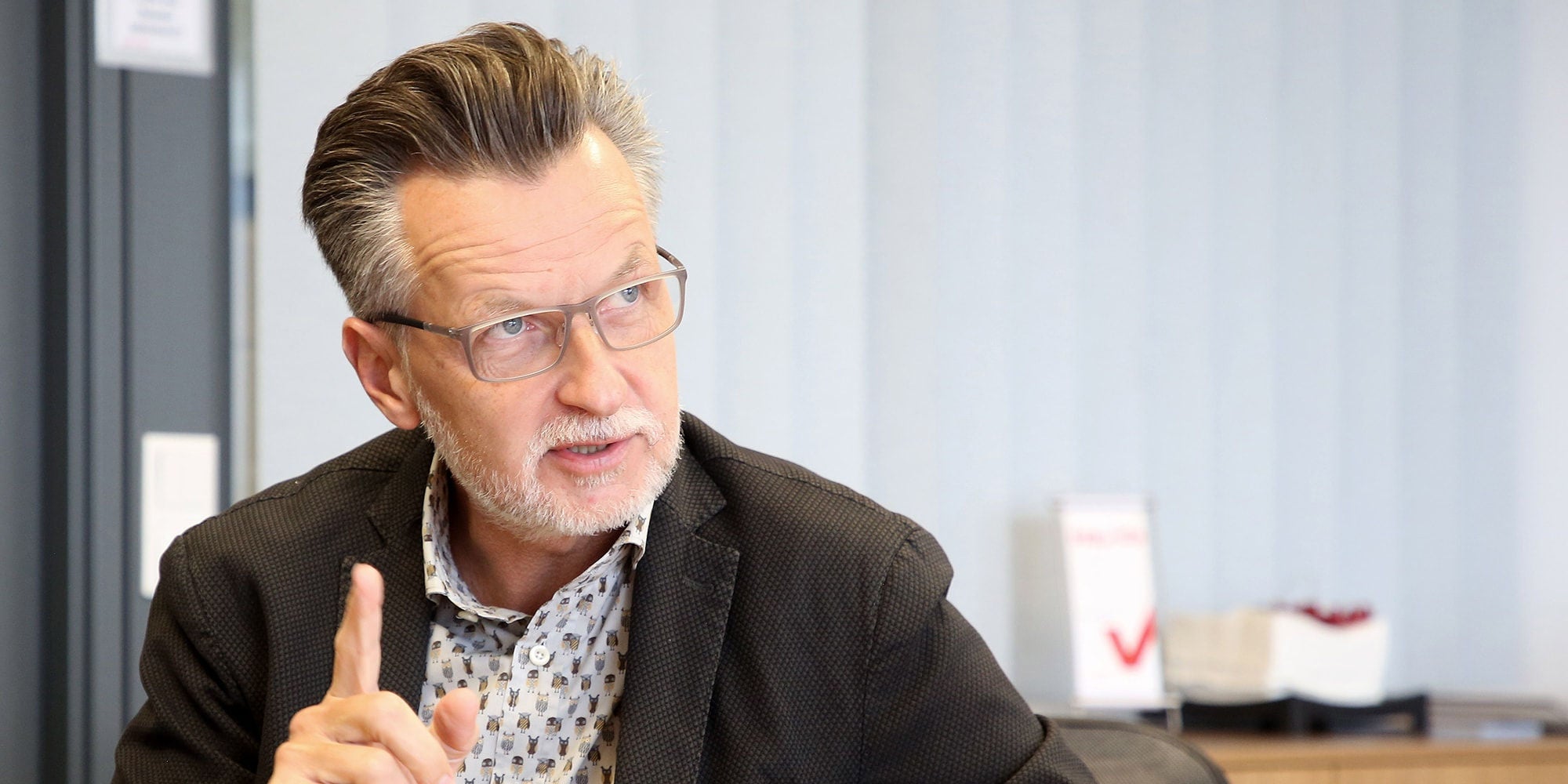
- Roman Hebenstreit, Chairman of the vida trade union
- Gerhard Tauchner, Chairman of the vida Railway Department
- Daniel Liebhart, Chairman of the vida Aviation Department
- Christine Heitzinger, Chairwoman of the vida Services Division
No brakes on wage increases
For the transport and service union vida, the two-year metalworkers' collective agreement "crisis agreement" under inflation is not a template for other industries. "The crisis of the metal industry is not the crisis of the entire country," said vida boss Roman Hebenstreit on Thursday at a press conference in Vienna. A wage agreement below inflation in the transport and service sectors would endanger economic recovery, the welfare state and municipalities. The vida boss warned of financial consequences for social security and municipalities due to low wage agreements, because this would reduce social security contributions and municipal taxes. "If we put the brakes on here, we will endanger the whole country," Hebenstreit warned.
Wages are the engine of recovery
The top trade unionist referred to the economic effects of collective bargaining agreements, especially if in low-wage areas - such as the service sector - the wage increase flows completely back into consumption. "Wages are the engine for the upswing." Austria's economy was in the longest recession in post-war history in 2023 and 2024, and minimal economic growth of 0.0 to 0.2 percent is forecast for 2025. "A strong wage development is the most effective economic injection we can imagine," Hebenstreit emphasizes, adding: "A wage diktat under inflation, on the other hand, not only weakens purchasing power, but also endangers the entire economy and the welfare state in the long term."
We need real wage growth
For the approximately 350 air traffic controllers of Austro Control, who handle all take-offs, landings and overflights, the collective bargaining negotiations started at the beginning of September. The union is demanding compensation for the annual inflation in 2025 plus a fair share of the massive increase in air traffic, Daniel Liebhart said at the press conference. On November 3, the collective bargaining negotiations for the retail workers will begin. Around 150,000 employees work in the warehouses and logistics of the retail trade. "After the wage cuts in the previous year, they need a real wage increase," demanded the chairwoman of the vida services department, Christine Heitzinger. In the security industry, wage negotiations will also start at the end of October for 18,000 employees. "Especially in an industry with a gross minimum wage of just over 2,100 euros, it must be clear: wages up - for all wage groups," demanded vida boss Hebenstreit.
Do not accept wage cuts
"This year, too, the following applies: Employees cannot accept wage cuts - it is not financially viable for them. Those who do this are not fighting inflation - they are fighting those people who keep this country running," explains Gerhard Tauchner, Chairman of the Railway Department at vida, about the ongoing rail collective bargaining negotiations for 55,000 employees. The basis for the collective bargaining negotiations is average inflation in the period from October 2024 to September 2025 (as of August: 2.92 percent). ÖBB alone will have to take on 25,000 new employees over the next five years due to retirements and fluctuation.
Relief in the religious hospitals of Upper Austria
Hardly any other occupational group deserves the title of "system maintainers" more than hospital staff, which consists mainly of women. But the hospital system suffers from a massive shortage of staff. According to forecasts, 34,000 additional nurses will be needed by 2030. "Work in the health sector is physically and mentally demanding. Overwork leads to longer waiting times and an increasing potential for aggression. Clinical pictures such as dementia and mental illnesses make work even more difficult," explains Hebenstreit. In addition to wage agreements above inflation, vida calls for binding personnel calculations and consequences if these are not met.
The high inflation affects low-income earners in particular, as they have to spend all of their income on housing, energy and food. Wage agreements under rolling inflation would further reduce their purchasing power – with serious consequences for people who become poorer despite working and negative effects on overall economic development. Private consumption, which accounts for more than half of Austria's gross domestic product (GDP), remains weak. Although real GDP in the 2nd quarter of 2025 is 0.3 percent higher than in the 1st quarter, it is 0.1 percent lower than in the same quarter of 2024. Only if incomes rise can purchasing power and thus consumption be strengthened. Especially in the low-wage sector, real wage increases are needed so that people can continue to afford daily life.
Labour market
The situation on the labour market, however, has deteriorated significantly. In August, 367,000 people were unemployed or in training. In the 2nd quarter, the unemployment figures even recorded an increase of 12.4% compared to the same quarter a year earlier. On the other hand, demographic change is leading to a shortage of labour, which is particularly noticeable in the railway sector, air traffic controllers or healthcare, for example. The following applies here: better pay and working conditions are the most effective means of surviving in the competition for workers.
Income and burdens
Numerous employees in the vida industries belong to the lower income tenths. Especially in retail and security, incomes are often in the lowest decile – combined with a negative savings rate. And this despite the fact that many of these employees work Sunday and night shifts. Low wages and part-time work are also widespread in the religious hospitals, while at the same time the burdens remain high. Although incomes are higher in the railways and air traffic control, the employees there are under enormous pressure and bear a great responsibility for thousands of passengers.
Good reasons to become a member right now
- You strengthen the bargaining power – the more we are, the better the collective agreements.
- Legal protection and advice when things get serious.
- Co-determination in the company: You give weight to your voice.
- Continuing education and networking: Sharing knowledge, learning strategies, winning together.
- All the benefits of a large community
- Solidarity that carries – even when things get uncomfortable.

Do you want negotiations to take place on an equal footing again – with results that reach your wallet?