Collective agreement for the hotel and catering industry: WKÖ protects problem cases instead of employees
Second round of collective bargaining ends without result – trade union vida criticizes blockade on wages and overtime regulations
Tourism
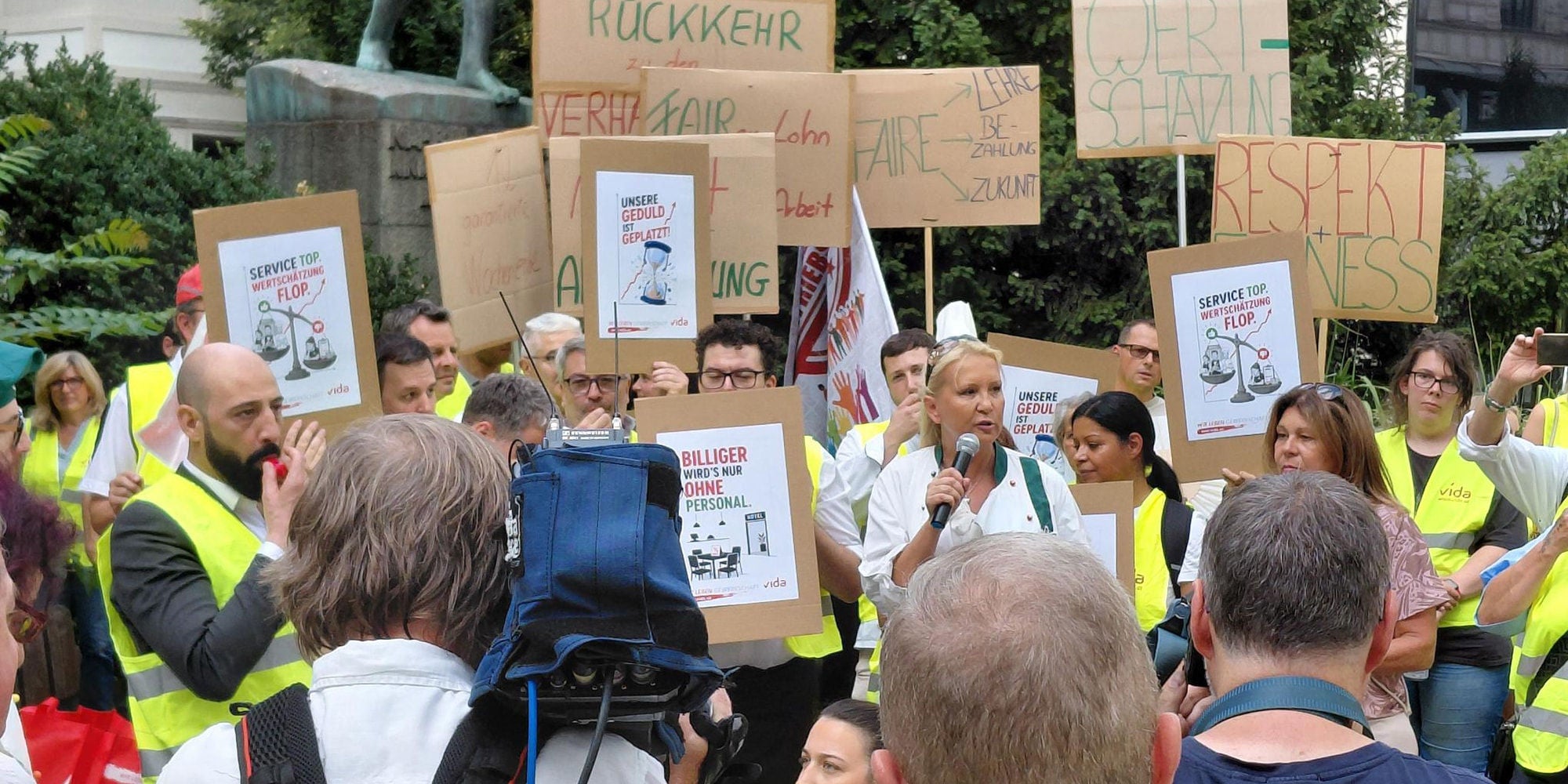
The second round of negotiations on the collective agreement (KV) for the hotel and catering industry on 7 April 2026 has also remained inconclusive. For the trade union vida, this reinforces the impression that the employers' side is not only preventing fair wage development, but is also blocking urgently needed improvements in overtime.
"With inflation of 3.6 percent, contracts below this mean real income losses. Especially in tourism, where many employees work at the poverty line anyway, this is completely incomprehensible," says vida negotiator Eva Eberhart, criticizing the Chamber of Commerce's offer of an average of 3 percent.
Controversial issue of overtime: protection for defaulting companies?
The criticism of the employers' attitude to overtime is particularly sharp. According to vida, the Chamber of Commerce rejects two central demands:
- Increase of overtime bonuses to 65 percent if they are paid late
- Extension of the expiry period for claims from the current four to eight months
"This protects precisely those employers who are late in paying overtime. Employees, on the other hand, are left sitting on their performance or run the risk of their entitlements expiring," says Eberhart.
Industry with structural problem
The discussion is not a detailed issue, but concerns the everyday lives of thousands of employees. Overtime is a reality in the hotel and catering industry in particular – often under high time pressure, with long working hours and little planning security.
"The employees do an enormous amount - often far beyond normal working hours. But when it comes to pay, the industry remains minimalist," emphasizes Eberhart.
Particularly explosive: According to interventions by the Chamber of Labour and vida, the industry is the frontrunner in unpaid overtime.

"A landlord cannot not pay his suppliers for months without consequences. Why should it be any different for employees?"vida-Verhandlungsleiterin
The demand
Overtime must be paid in full and on time – and those who do not comply with it must no longer get away with it without consequences.
"Problem children" distort competition
For the trade union vida, it is not just about individual grievances, but about a structural problem in the industry.
"The WKÖ de facto protects the problem children of the industry," Eberhart criticizes. This refers to companies that systematically violate rules – for example, by:
- unpaid overtime
- Violations of youth protection regulations
- Manipulation of cash registers
These practices would have far-reaching consequences:
They disadvantage not only employees, but also those companies that operate fairly and adhere to rules.
vida calls for clear rules instead of excuses
The trade union vida remains willing to negotiate, but expects a significantly improved offer from the employers' side.
The industry does not need excuses – but binding rules that protect employees and create fair competitive conditions.
Because without better working conditions, the central problem of the industry will not be solved: the shortage of workers.
Good reasons to become a member right now
- You strengthen the bargaining power – the more we are, the better the collective agreements.
- Legal protection and advice when things get serious.
- Co-determination in the company: You give weight to your voice.
- Continuing education and networking: Sharing knowledge, learning strategies, winning together.
- All the benefits of a large community
- Solidarity that carries – even when things get uncomfortable.

Do you want negotiations to take place on an equal footing again – with results that reach your wallet?