Welcome to the Tourism Team
What skilled workers need to stay - trade union vida visits the Hotel Astoria in Vienna.
Cover Story
Full beds, full coffers: Tourism in Austria is booming. But behind the scenes, the façade is crumbling in some places. Long working hours, little predictability, high pressure – many employees leave the hotel and catering industry before they have really arrived. With the Red-White-Red Card, the federal government is relying on skilled workers from abroad. The trade union vida asks: Why don't those who are already here stay?
Five people, five stories
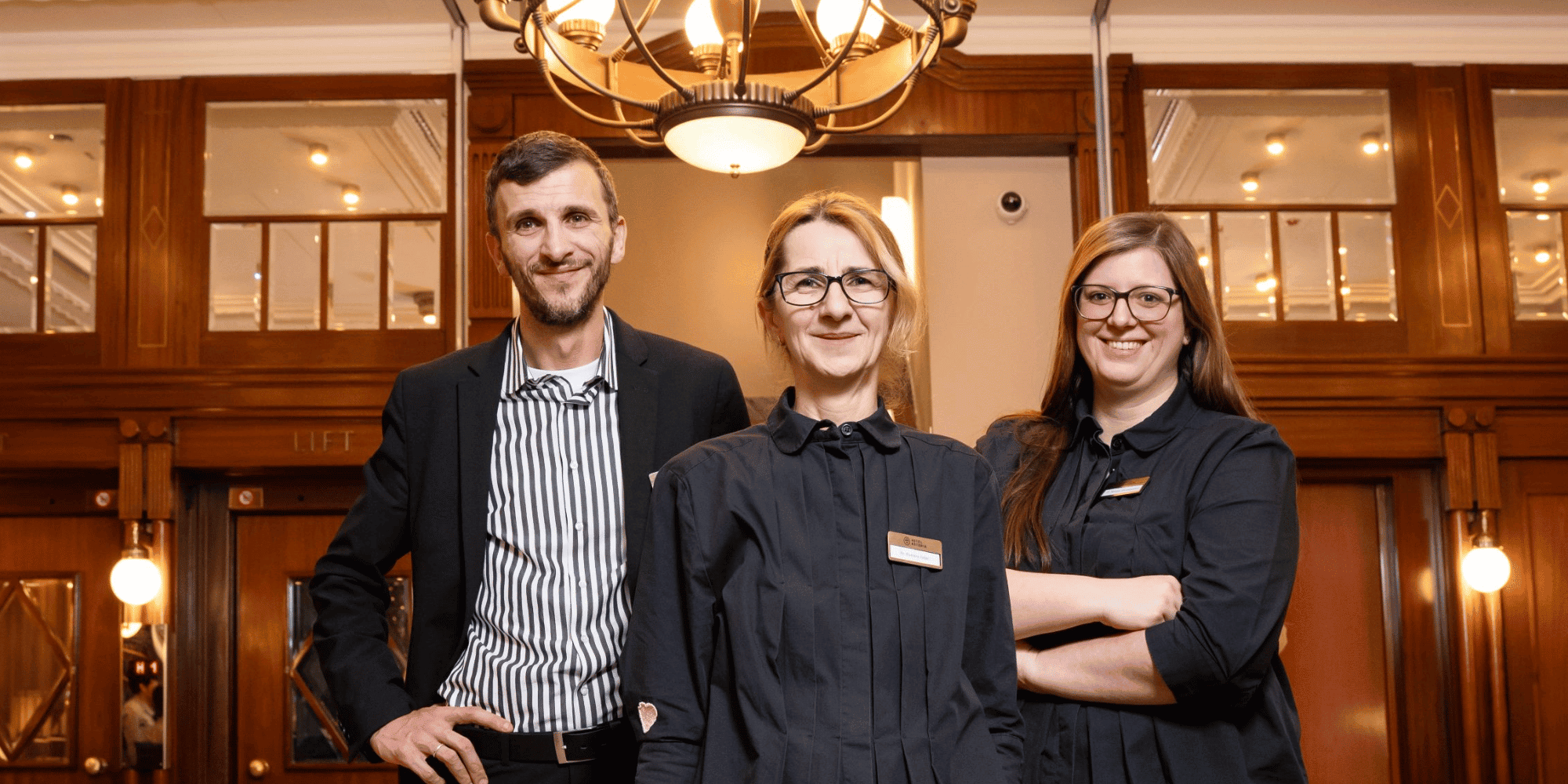
Early in the morning in the heart of Vienna. In front of the Hotel Astoria, the city is still half asleep. Inside, the day begins with the soft clinking of coffee cups, the rolling of carts over carpeted floors and the whirring of elevators. The hotel has long been awake – and so are its employees. At the reception, Bettina Baumgartner welcomes newly arriving guests, while Ramiza Jahic checks the rooms on the bel étage. In the kitchen, Tomasz Krokosz prepares breakfast, while Arber Osmani checks that everything is ready for service. And in the middle of it all, Vivienne Bassler learns how the hotel business works from A to Z. Five people, five stories, one common challenge: The industry in which they work is desperately looking for staff.
Good work starts with good conditions
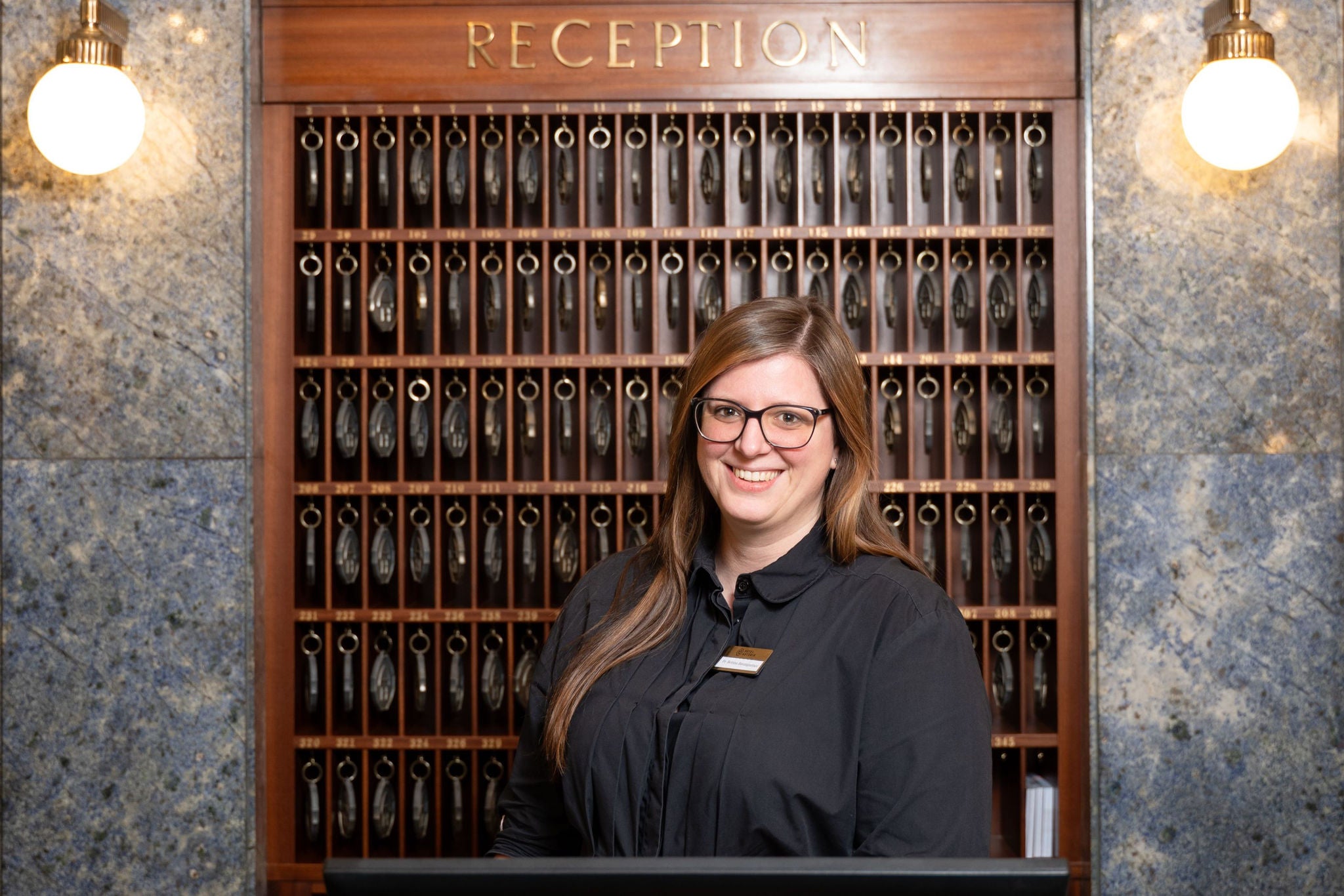
"The shortage of skilled workers in tourism is homemade," says Bettina Baumgartner. "If you don't offer good working conditions, people leave. Period." The Viennese knows what she is talking about. After all, she has been working in the industry for 20 years, 15 of them at the Hotel Astoria. Bettina's workplace is exactly where paths cross: at the reception. This is where every stay begins and ends. Bettina Baumgartner checks occupancy figures, arrivals and departures. While guests check in, phones ring and e-mails come in, the front office manager keeps track of everything. She coordinates the team at the reception, steps in when things get tight and mediates between departments. Bettina Baumgartner grows with every challenge – and learns something new every day. "The only thing that hasn't changed in recent years is that something keeps changing," she smiles. Her smile is professional, but never fake. Even in the face of complaints from dissatisfied guests, her voice remains calm. She knows that it is often at the reception desk that it is decided whether a problem is remembered as a nuisance or as a well-solved situation. For many guests, Bettina Baumgartner is the face they associate with the entire stay - and that is exactly what makes her job as challenging as it is important. "In the end, it's always about making people feel welcome and comfortable."
Between high demands and guest wishes
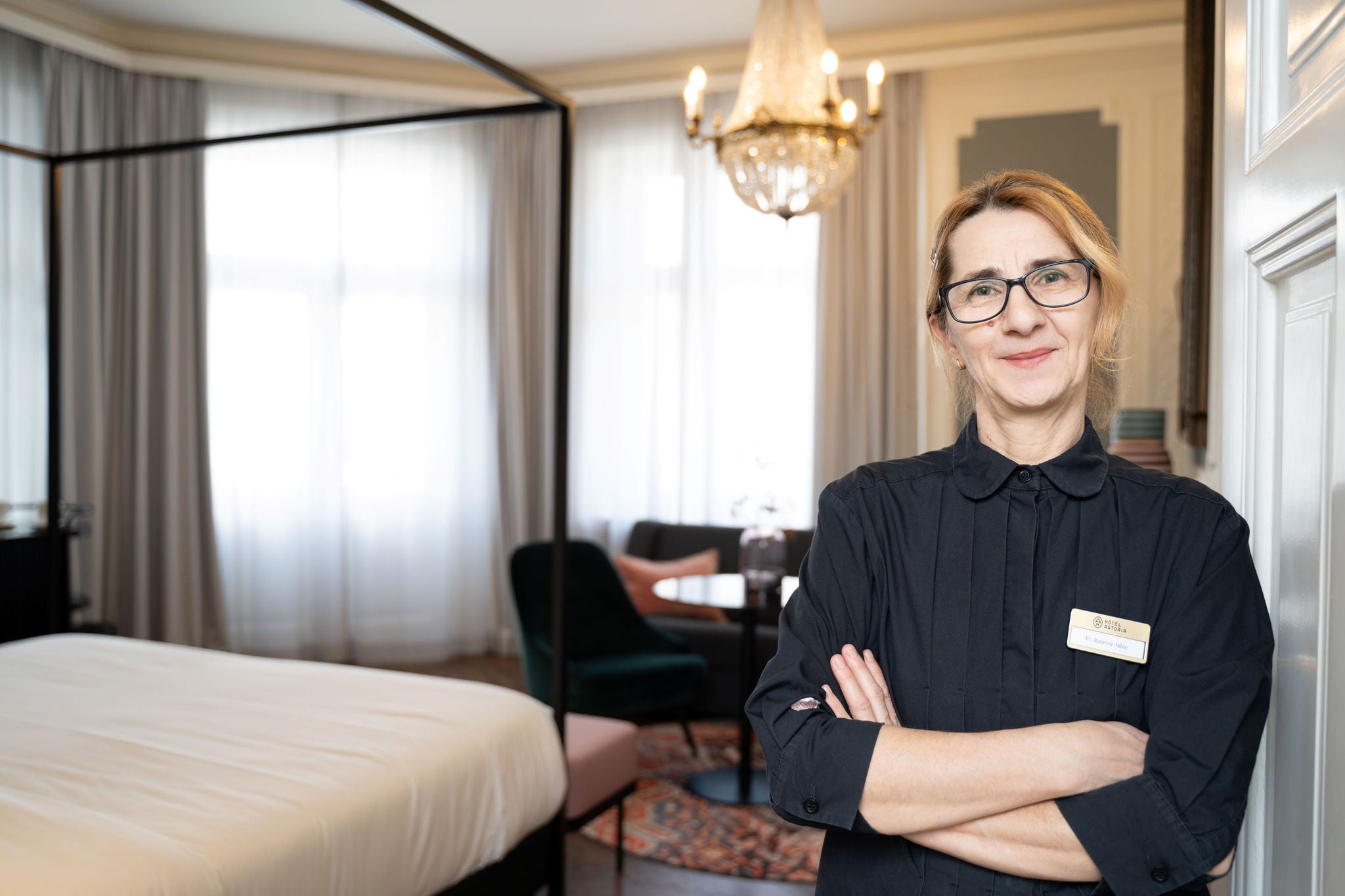
While new guests arrive in the hotel lobby, Ramiza Jahic checks the first rooms on the first floor. Your gaze glides over freshly made beds, wrinkle-free pillows, shiny fittings. She sees what remains hidden from others: a water stain on the mirror, a bed edge that is not exactly aligned, a forgotten speck of dust on the groin. Her workplace is the whole hotel – she knows it like the back of her hand. Ramiza Jahic has been working at the Astoria for 21 years, and she has been working in the industry for a total of 33 years. With checklists and her smartphone in her hand, she coordinates the housekeeping team. "Fresh towels and flowers are still missing in the suite," she calls out to a colleague. Ramiza Jahic is responsible for cleanliness, order and a feel-good atmosphere. She and her colleagues work according to a strict schedule and under physical strain. After all, the aim is to "make 125 rooms shine," says the housekeeper with a beaming smile. She would like to see another worker, because "more helping hands never hurt". If a suite needs to be ready for occupancy earlier or a guest has special requirements, it organizes solutions. Their aim is for guests to have this feeling when they enter the room: Everything is right here. In recent years, not only have the in-house quality requirements increased, but also the wishes of the guests, which Ramiza Jahic fulfills with her team – inconspicuously and quietly in the background. "Our work is often underappreciated. But without the power of housekeeping, no hotel runs."
Well-rehearsed team as the most important ingredient
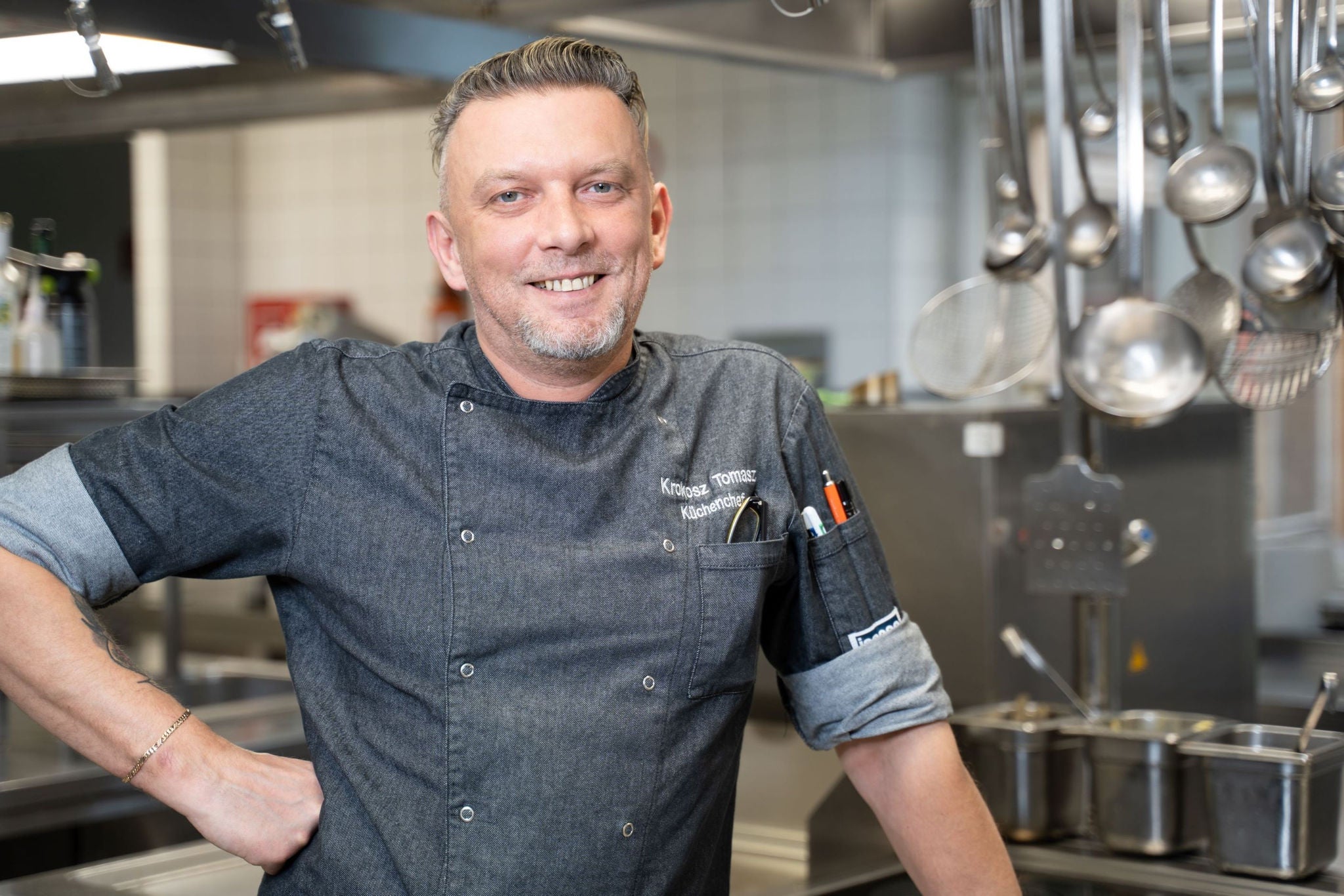
When it is still dark in the guest rooms, the lights have long been on in the kitchen. Between stainless steel surfaces and the rhythmic clacking of knives, Tomasz Krokosz's day begins with a scrutinizing look at the deliveries: fresh fruit, crunchy vegetables. Quality is decided in the detail – and in the first impression. He rarely stands still – and often behind the stove himself. "I love trying out new recipes," he smiles. Sometimes he tastes a sauce and changes it with a pinch of salt, sometimes he gives precise instructions. His kitchen is a finely tuned system – every move is perfect, every team member knows his or her place. As head chef, Tomasz Krokosz keeps track of things, corrects, praises, intervenes. While the guests only see the finished dish, he is responsible for everything behind it: purchasing, calculation, hygiene, staff, creativity – and the reputation of the house. The chef sometimes works up a sweat in the process. "Staff shortages make every case of illness a stress test." In this case, full commitment is required: services are redeployed or taken over by the company itself. Tomasz Krokosz knows how exhausting everyday work can be. He has also toyed with the idea of leaving the industry, but has stayed. "Because I simply love my job." Tomasz Krokosz has now been working in the kitchen for 32 years – six months of which at the Hotel Astoria. What does he wish for himself and his colleagues? "We often work standing up in the kitchen, under high heat, lifting heavy pots – it's a backbreaking job. To ensure that the constant strain is not deep in the bones, good tools and ergonomic workplaces are also needed."
No service without people
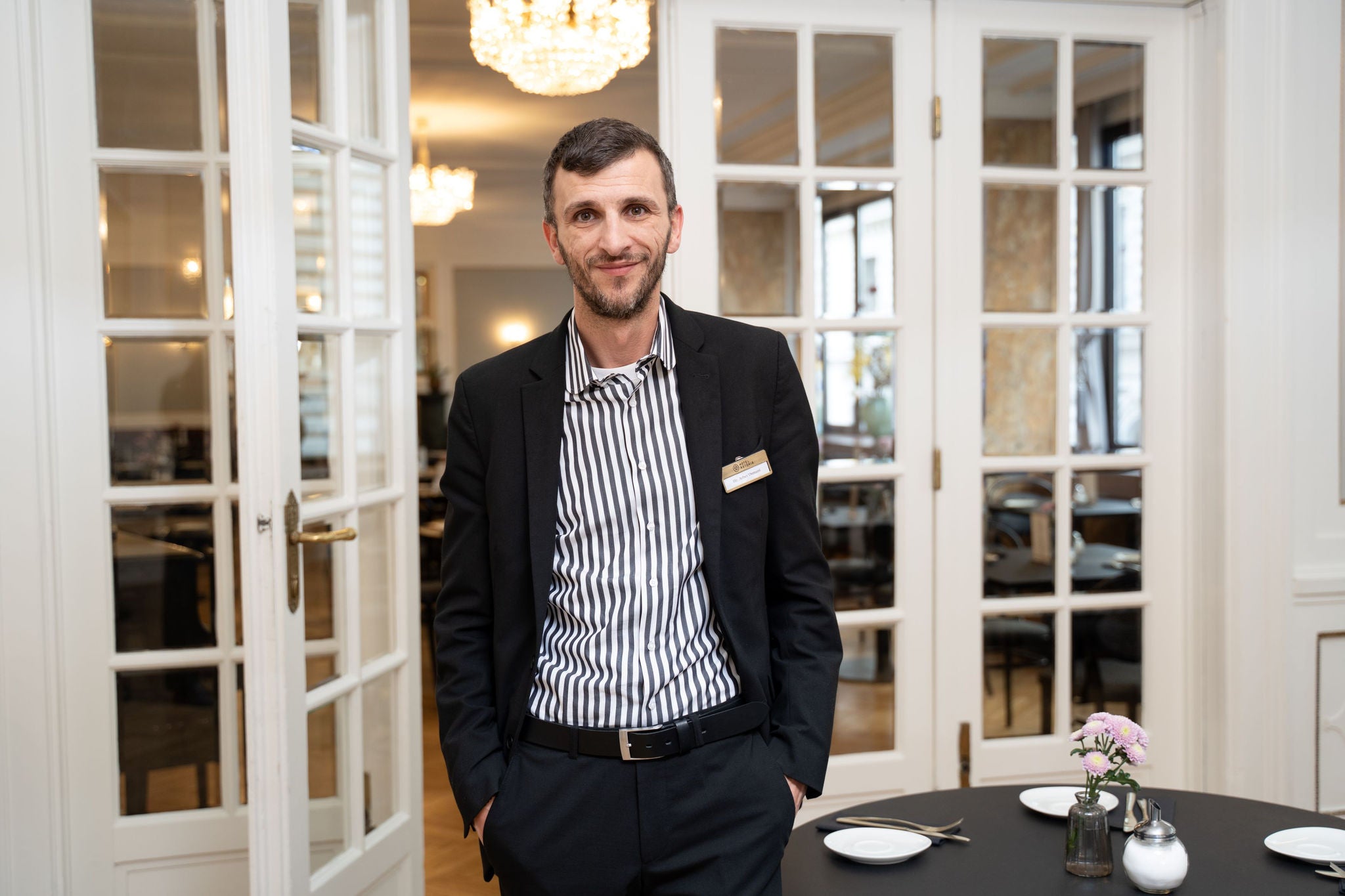
Even before the first guests enter the breakfast salon, he is already there. Arber Osmani checks whether the buffet is ready: crispy pastries in rows, shiny fruit platters, the smell of coffee in the air. His workplace is the space between the coffee machine and the guest table. The service manager moves attentively through the hall and reacts before anyone has to say it. "Good service doesn't start at the buffet, but with the people," says Arber Osmani. When things get hectic, he remains the calm pole. With clear instructions, he conducts his team like an orchestra, so that a harmonious sequence emerges from many individual movements. As service manager, Arber Osmani has personnel responsibility. He takes care of training, duty rostering and recruiting. The service manager knows that he can only maintain the high level with sufficient staff. And he knows what it takes to stay in the industry. "More money would be a big and important step," he says. Arber Osmani has been working in tourism for 23 years, and for the past year at the Hotel Astoria. But he has also thought intensively about leaving the industry. "I finally decided to stay – and with the new position of service manager, I was happy to accept the new adventure," he beams.
New skilled workers at the start
While Arber Osmani and his colleagues at the Hotel Astoria have been working in the industry for many years, Vivienne Bassler is only at the beginning of her career. She is currently completing an apprenticeship as a hotel and hospitality assistant and is learning how a hotel business works in practice at the Astoria. Every new day brings new guests, new tasks and new challenges. "That makes it varied and exciting - but also challenging," says the trainee. Although she is only at the beginning of her career, she is already feeling the limits of the industry. She would like to see clear rules against overtime and significantly better pay. "That's simply part of good working conditions." Vivienne Bassler is about to take her final apprenticeship exam. She does not yet know what her professional future will bring her. "For starters, I want to stay in tourism. But who knows where my professional journey will take me," she says with a smile.
Strong voice for the workforce
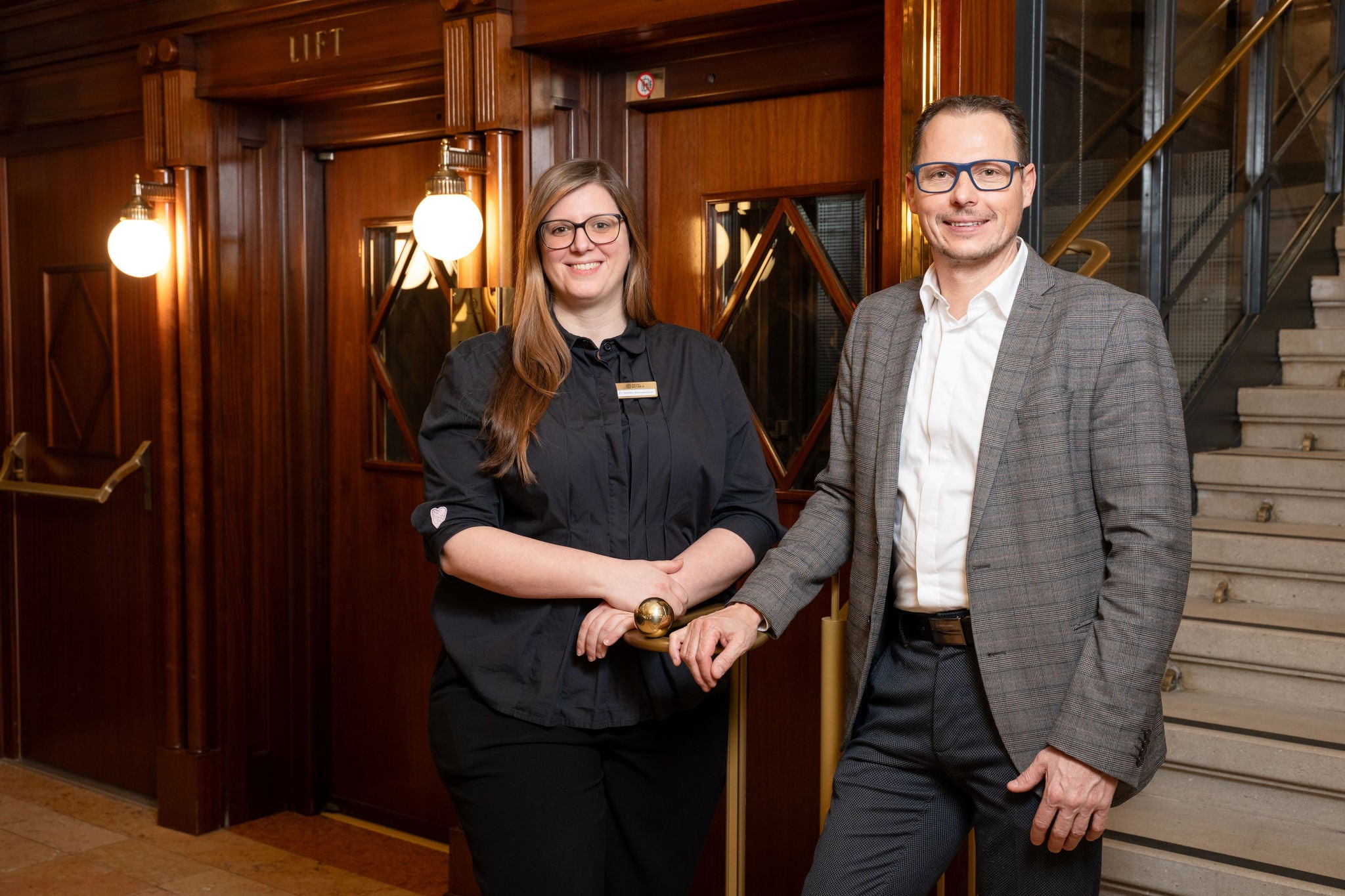
The journey begins and ends at the reception – also at the Hotel Astoria. Bettina Baumgartner knows what keeps her and her colleagues in this house. "It's reliable working hours, good pay, an appreciative working atmosphere and the opportunity to play an active role." Speaking of which, the front office manager not only fulfills the wishes of her guests. As a member of the works council, she takes care of the concerns of her colleagues. It is not only in demand at the Hotel Astoria, but also among all employees of Verkehrsbüro Hospitality, part of Austria's largest tourism group. When asked why so many people are leaving the industry, Bettina Baumgartner has a clear answer: "The workload is high. The expectations of guests are rising, as is the cost of living. However, there is still room for improvement in terms of money. For many, getting by on their income and getting through the working day is a constant balancing act."
Because people count
Tourism thrives on people like Bettina Baumgartner, Ramiza Jahic, Tomasz Krokosz, Arber Osmani and Vivienne Bassler. Those who get up early in the morning and ensure that others can go on vacation keep the industry running. The trade union vida is fighting for politics and business to create the basis for employees in the hotel and catering industry to want to stay – and above all to be able to. Businesses like the Hotel Astoria show that good work is possible. But it takes more than foreign recruitment or image campaigns. It takes people to stay – because they are respected, paid fairly and treated well.
Good reasons to become a member right now
- You strengthen the bargaining power – the more we are, the better the collective agreements.
- Legal protection and advice when things get serious.
- Co-determination in the company: You give weight to your voice.
- Continuing education and networking: Sharing knowledge, learning strategies, winning together.
- All the benefits of a large community
- Solidarity that carries – even when things get uncomfortable.

Do you want negotiations to take place on an equal footing again – with results that reach your wallet?