Order Hospitals Upper Austria: All-day strike on 22 January 2026
vida calls for a new round of negotiations. Back to the negotiating table until January 30 for a fair offer - strike is the consequence of a months-long standstill in the negotiations.
Strike
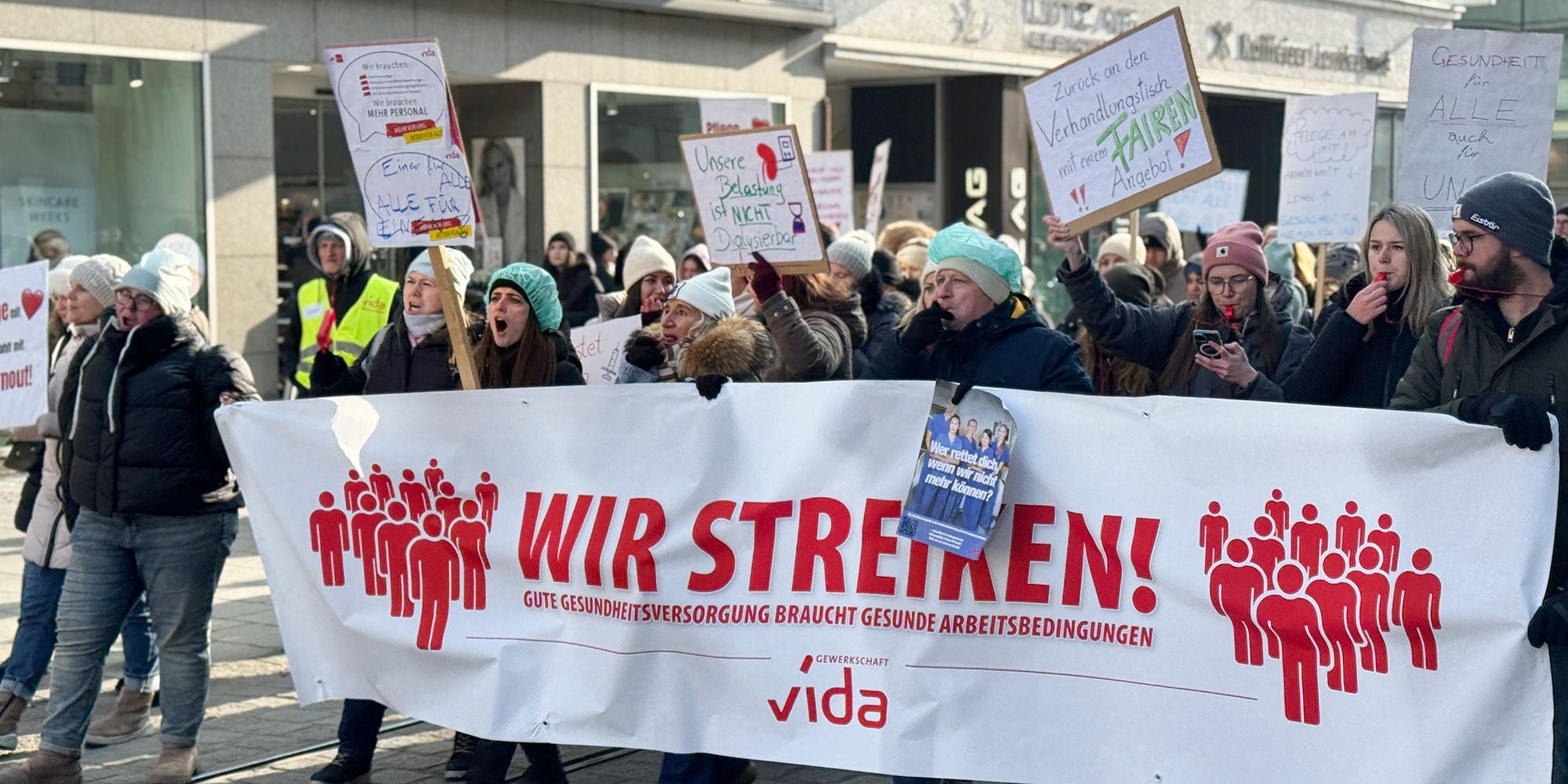
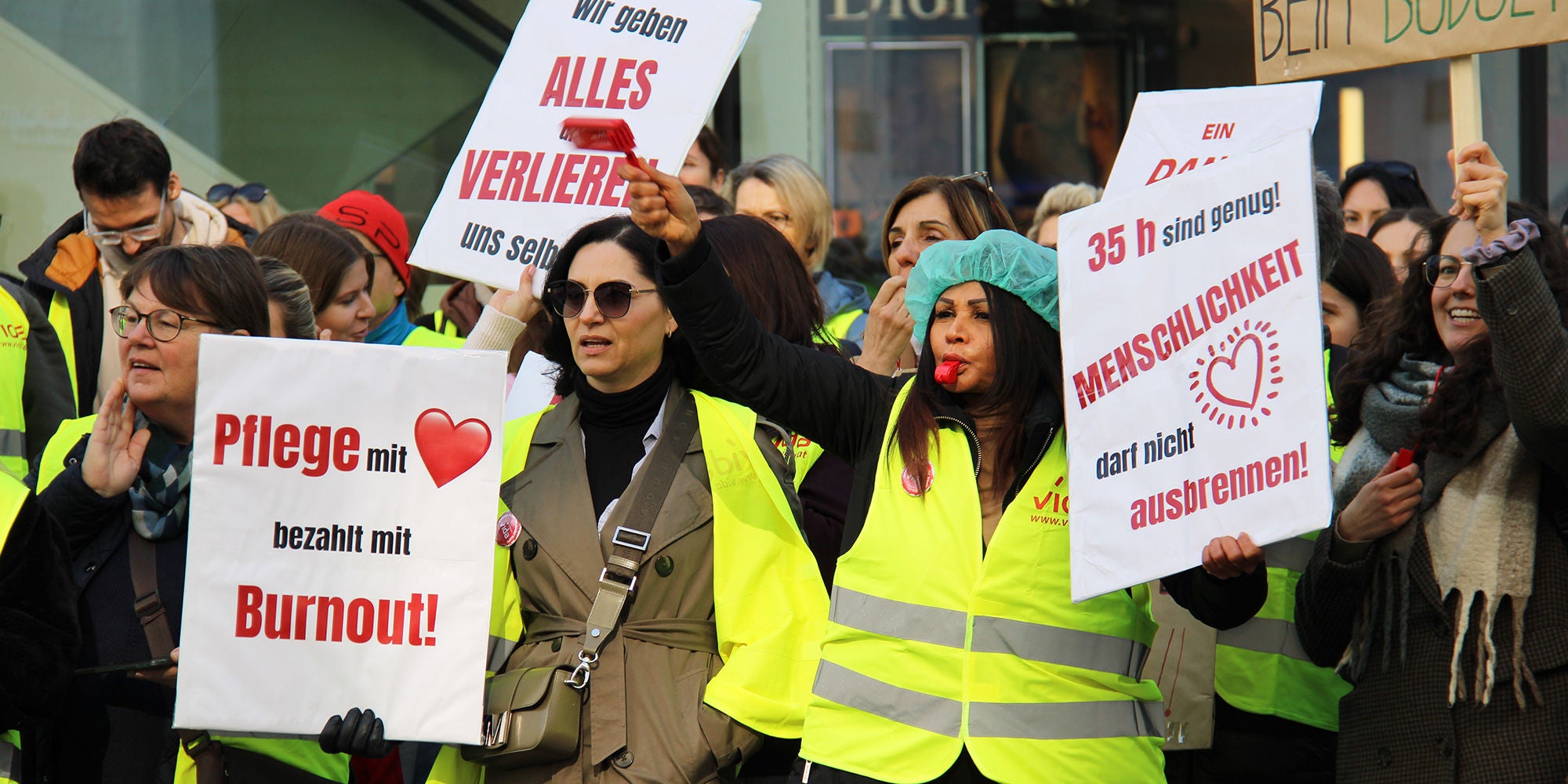
On Thursday, January 22, a full-day strike of non-medical employees took place in all eight religious hospitals in Upper Austria. Parallel to the strike in the houses, the employees met from 10 a.m. for a public strike meeting in Linz.
Impressions
Around 2,000 of the approximately 4,000 employees on duty actively participated in the industrial action, and in some companies the participation rate was up to 72 percent. The highlight was a public strike meeting in Linz with around 800 participants.
Despite strikes, emergency and patient care was ensured throughout. The union sees the strike as a clear signal to the employers to quickly present a negotiable offer that both covers inflation and brings relief from the high workload.

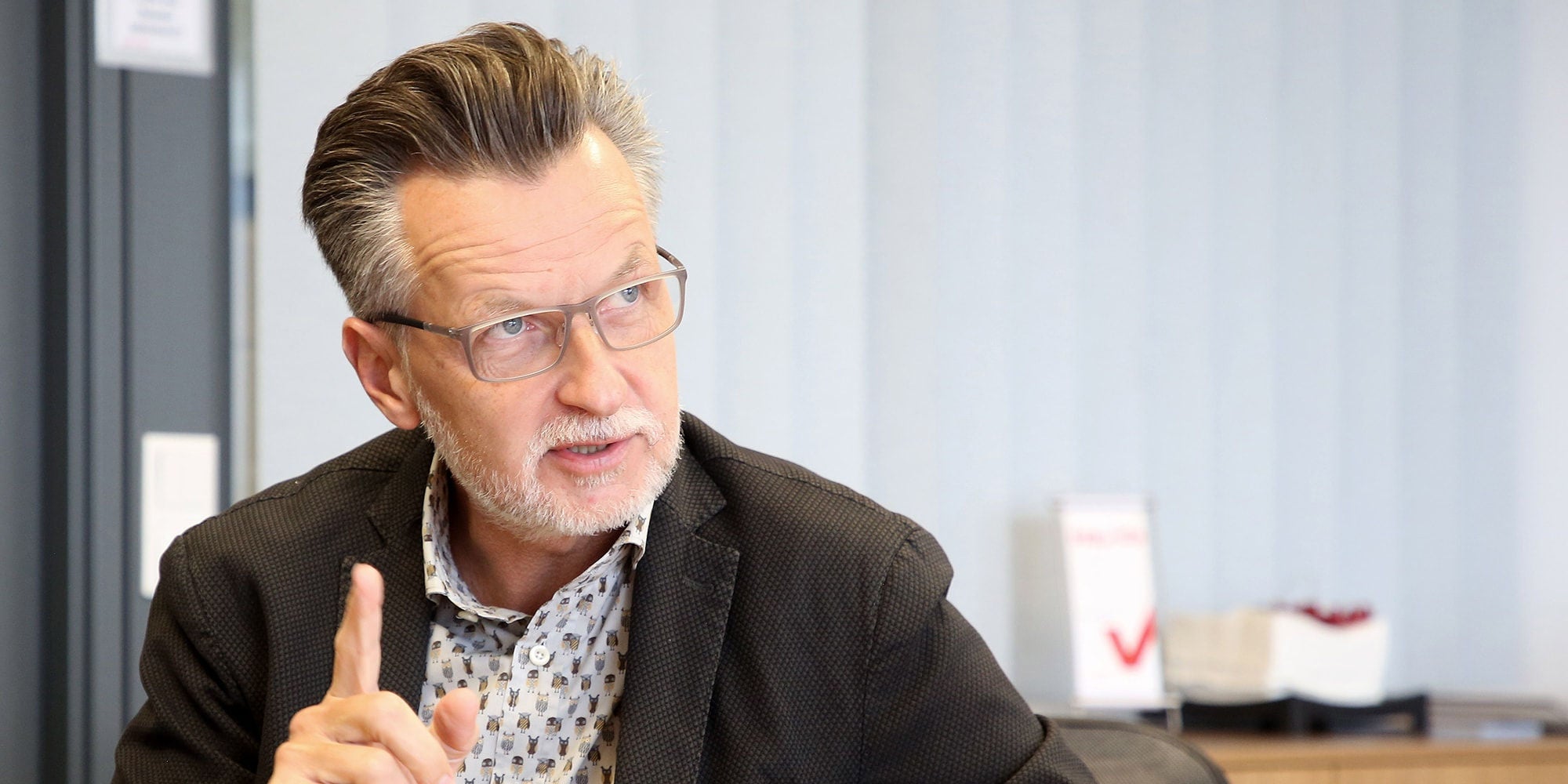
"The high participation in the strike shows how serious the situation is. There is an urgent need for an appreciative offer from employers that compensates for inflation and provides answers to the massive workload."vida-Vorsitzender
Back to the negotiating table until 30 January
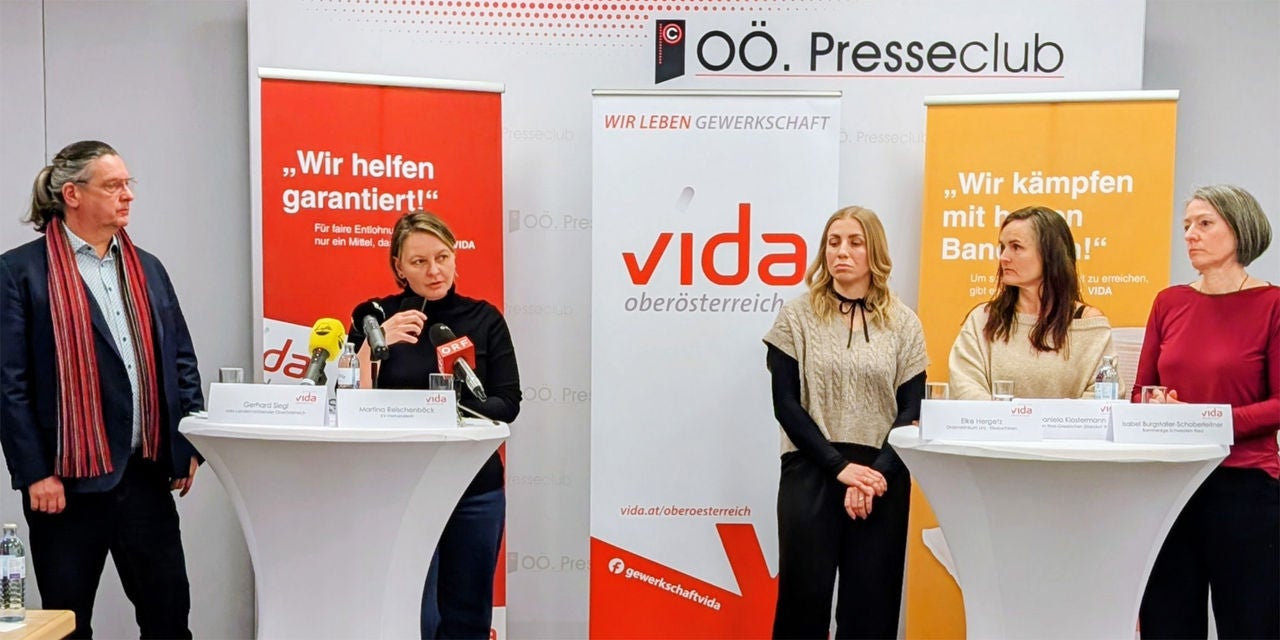
The strike was triggered by four inconclusive rounds of collective bargaining negotiations for around 10,000 employees. The employees' demands to the employers: an offer that compensates for inflation, a gradual reduction in working hours and concrete measures against the massive workload. "Today's strike is the consequence of months of stalemate in the negotiations," explains Martina Reischenböck, negotiator for the trade union vida. "At the same time, we state: We want to negotiate - and seriously."
The trade union vida calls on the employers in writing to enter into a fifth round of negotiations in order to work together and constructively on a solution. A response is expected by Monday, January 26. The aim is to return to the negotiating table by the end of January at the latest and to reach a fair and sustainable result as soon as possible.
Health care secured
Strike committees have been set up in all houses on 22 January, and the employees have been comprehensively informed. The well-being of the patients has top priority. The strike was deliberately announced early in order to enable orderly processes and to ensure emergency service agreements for all occupational groups. The care of emergencies and inpatients is guaranteed at all times. Any postponements or cancellations of examinations, treatments and interventions were communicated by the hospital management.
"This strike is not an end in itself. It makes visible how stressful the normal condition in the hospital has long since become," Reischenböck emphasizes. "Good working conditions are the basis for safe and high-quality health care."
State politics also has a responsibility: "The permanent overload in the health care system is a structural problem. Sufficient financing, clear framework conditions and noticeable improvements for employees are needed – otherwise the staff shortage will continue to worsen," Reischenböck concludes.