KV Ordensspitäler Upper Austria: Has state politics gone from being a passive observer to a stumbling block?
Seventh round of collective bargaining negotiations on 12 March – Employers refer to political requirements from the province of Upper Austria
KV negotiation

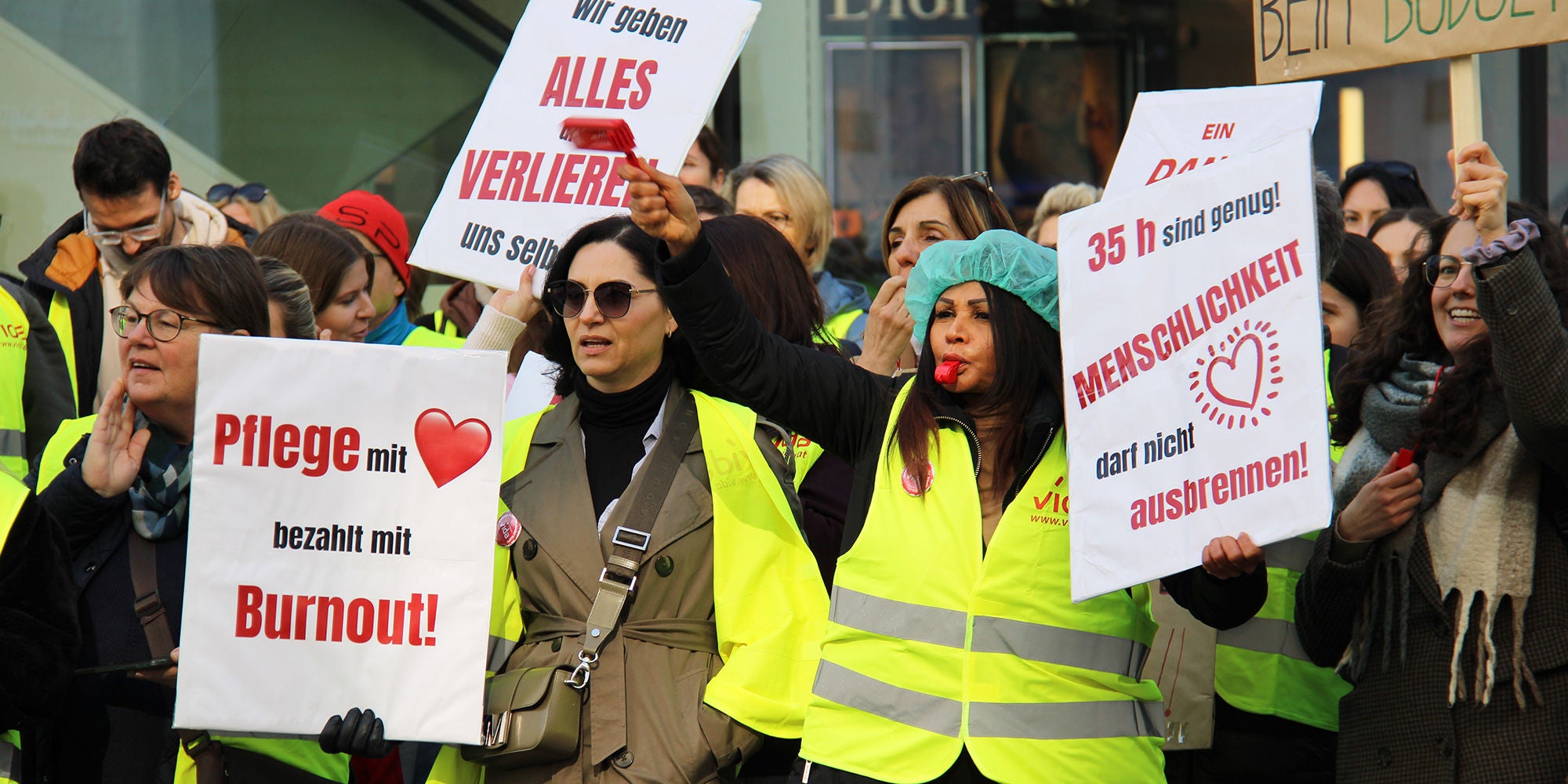
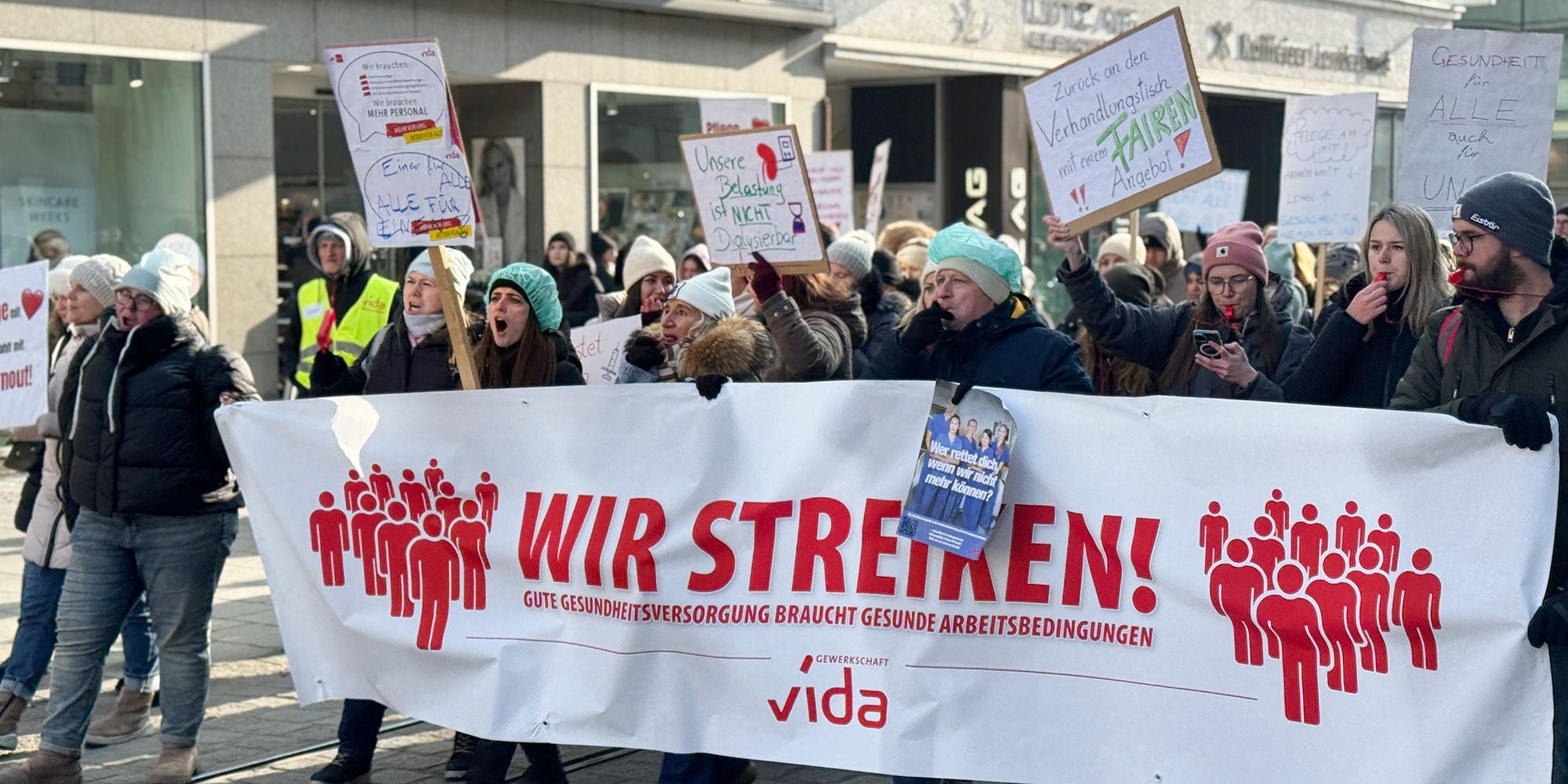
On Thursday, March 12, the negotiations on the collective agreement (KV) of the Order Hospitals of Upper Austria will enter the seventh round. Despite two large-scale strikes, there have been no significant improvements in the employers' offer so far. As a reason for their lack of accommodation, the hospital management refers to political guidelines of the state government - although it had previously asserted that it would not interfere in collective bargaining negotiations.

"This ping-pong game must come to an end. Governor Stelzer, Deputy Governor Haberlander, provide clarity! Are there really such requirements for employers?"KV-Verhandlerin der Gewerkschaft vida
After six rounds of negotiations, not only to stand idly by, but even to stand in the way of an improvement in working conditions in the hospitals of the Order, would be irresponsible towards the employees and the Upper Austrian population," Reischenböck emphasizes.
The trade union vida therefore calls on the decision-makers in the state to publicly comment on the alleged political requirements - and above all to work constructively on a solution instead of acting as a stumbling block.
Compromise proposal on working hours
The negotiations so far have been extremely tough. Both patients and employees are the victims, who are increasingly becoming a pawn between politicians and employers.
"My colleagues desperately need this relief. A frighteningly high proportion of healthcare workers are already thinking about leaving the profession."KV-Verhandlerin der Gewerkschaft vida
The employee side has demonstrated its willingness to compromise several times: Instead of the originally demanded gradual reduction in working hours by five hours, employees are now only demanding a reduction of two hours. The goal is a 37-hour week – a level of working time that has long been a reality in many other industries.
However, this concession has not yet been followed by any significant improvement in the employer's offer.
"My colleagues desperately need this relief. A frighteningly high proportion of healthcare workers are already thinking about leaving the profession. The main reasons for this are the high number of working hours and the frequent overtime due to inadequate staffing," Reischenböck emphasizes.
If those employees who are currently still working in the system are also lost, the problems would become even worse - and ultimately also jeopardize patient care.
State politics should work on a solution
With a view to political responsibility, Reischenböck once again calls on the state government to take responsibility:
"Mr. Stelzer, Ms. Haberlander – where are your proposed solutions? And what do you say to those people who have been working beyond their own capacities for years, neglecting their families and sometimes risking their health to care for patients in Upper Austria?"
The trade union vida continues to rely on an agreement at the negotiating table. However, the prerequisite for this is an improved service.
Negotiating also means approaching your counterpart. And if it is only possible with the support of state politics, which creates the financial leeway, then it is high time for them to make a constructive contribution.
Finally, she reminds state politicians on whose shoulders the country's health system rests:
"The employees help people who are dependent on support every day. State politics cannot and must not deny them its support now."