vida remains skeptical after conversation with State Secretary Zehetner
The vida trade union continues to rely on the mediation of Tourism State Secretary Elisabeth Zehetner. However, it remains uncertain whether the Chamber of Commerce is willing to engage in further collective bargaining negotiations and a fair offer.
Tourism KV

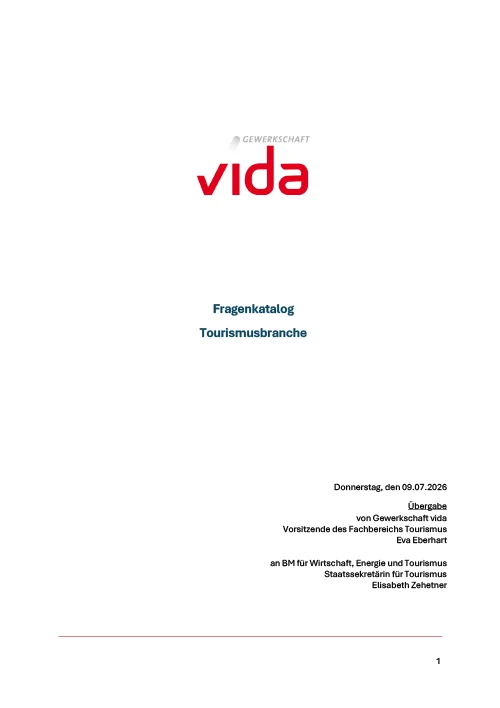
During the meeting, vida handed over a comprehensive list of questions on the future of Austrian tourism, fair wages and the protection of up to 250,000 employees.
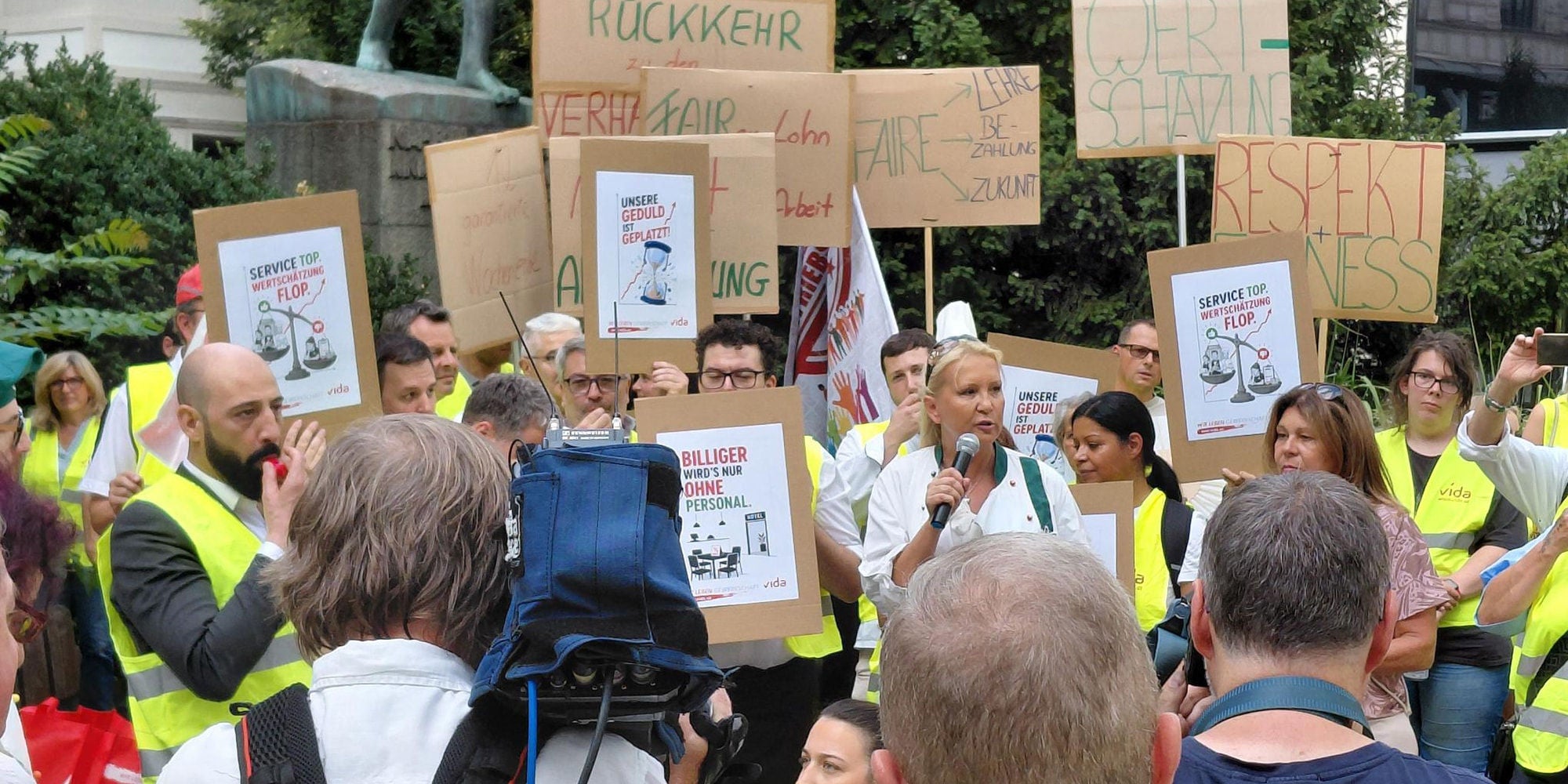
The collective bargaining negotiations for the up to 250,000 employees in Austrian tourism are still stuck. The Austrian Federal Economic Chamber (WKÖ) had unilaterally broken off the negotiations after the trade union vida had demanded compensation for rolling inflation and improvements in working conditions.
The employers' last offer would have resulted in real wage losses, especially for employees in the lower wage groups and apprentices. State Secretary for Tourism Elisabeth Zehetner then offered to act as a mediator between the social partners. The trade union vida accepted this offer.
Objective discussion, but still no solution for the tourism collective agreement
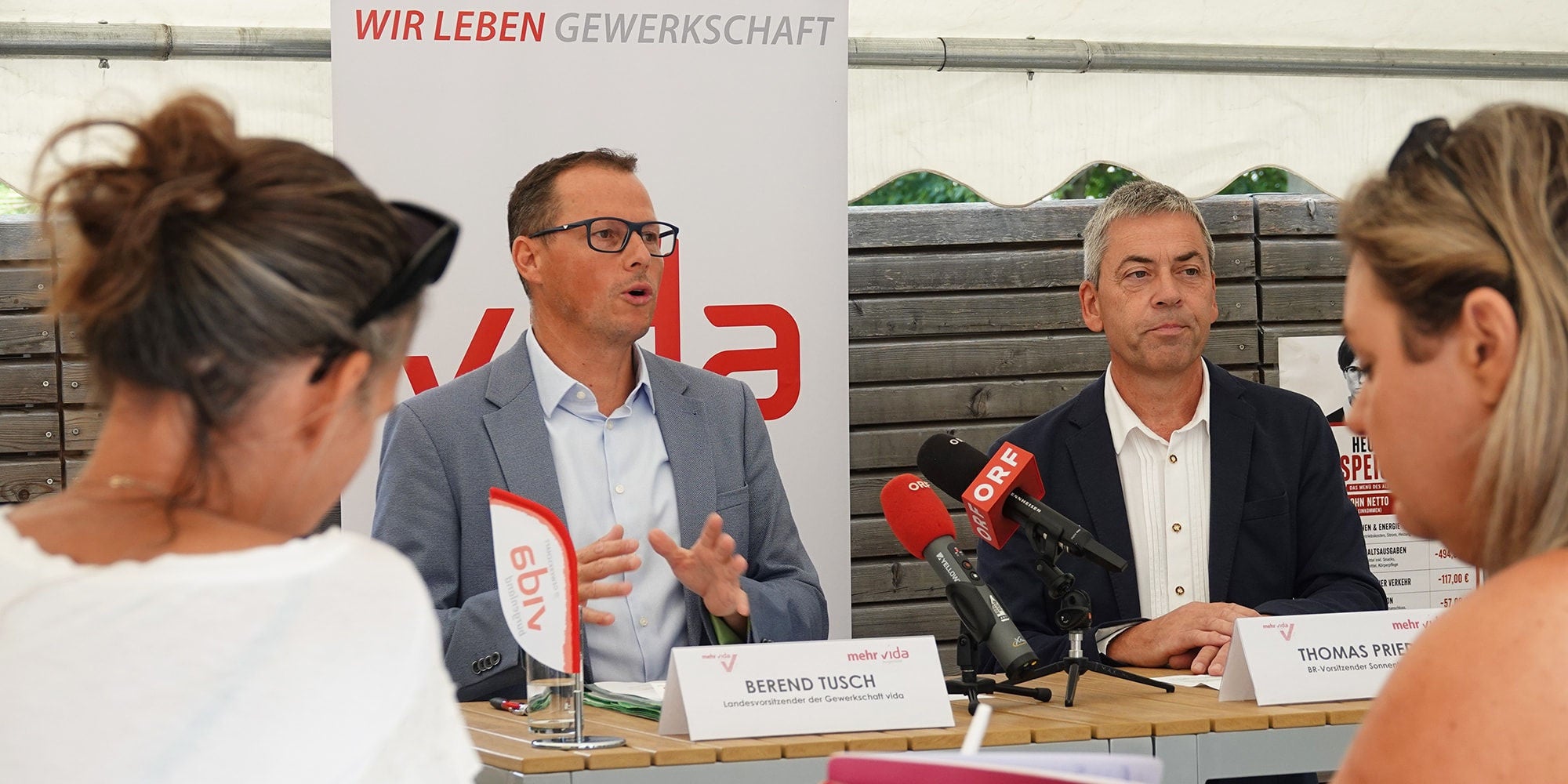
At a meeting with the State Secretary, vida explained the course of the collective bargaining negotiations so far and the reasons for their failure. Zehetner had taken extensive time to understand the positions of the union.
According to vida, there was agreement on a central problem in the industry: the high staff turnover. This is not only problematic for employees and companies, but also for the economy. Measures are therefore urgently needed to keep people in tourism longer.

"We continue to count on the State Secretary's bridge building, because the employees must not go under."Vorsitzende des vida-Fachbereichs Tourismus
The prerequisites for this are fair wages, predictable working hours and good working conditions. The union also made it clear that the WKÖ's stance endangers the "Vision T" for the future of tourism presented by the federal government.
vida doubts new offer from employers
Despite the constructive discussion, Eva Eberhart remains skeptical as to whether there will actually be a resumption of the collective bargaining negotiations. The decisive factor is whether the employers are willing to improve their previous offer.
"A new offer from the WKÖ will probably not be able to bring about Ms. Zehetner so easily. The question arises as to whether employers can be persuaded to reverse the real wage cuts in their last collective bargaining proposal for colleagues in the wage groups at risk of poverty and for apprentices," explains Eberhart.
The union maintains that a collective bargaining agreement must not lead to employees being able to afford less despite working full-time.
Questions on wage policy, labour migration and employee protection
At the meeting, vida handed over a comprehensive list of questions to the Secretary of State for Tourism on the situation of the industry and its employees. The union expects a quick and concrete response.
Among other things, vida wants to know why Zehetner had previously called for wage restraint despite high sales and record results in tourism. The question also arises as to whether the employees can now count on the concrete support of the State Secretary in the further wage negotiations.
Another focus is on the protection of foreign workers. Their share in Austrian tourism is already around 60 percent. vida therefore demands answers to how existing and newly immigrated staff should be protected from wage pressure, exploitation and worse working conditions.
Red-White-Red Card must not become a means of exerting wage pressure
The union is also critical of the efforts to recruit more workers from third countries for tourism. The industry data would not indicate an acute labor shortage.
vida therefore asks why immigration from third countries should be further promoted and how jobseekers in Austria are prevented from being replaced by cheaper labour.
The union is also demanding transparency from the State Secretary about those companies that recruit employees via the Red-White-Red Card. It must be comprehensible how these companies ensured that no jobseekers in Austria were displaced.
Public money: Transparency instead of temporary parking of employees at the AMS
The handling of public funds is also part of the list of questions. vida wants to know which tourism businesses have received state aid during the Corona pandemic and at the same time regularly park employees at the Public Employment Service.
This refers to companies that dismiss employees seasonally, thus passing on the costs of unemployment to the general public and rehiring the same people later.
The union questions why such companies are treated the same as companies that create stable year-round jobs when it comes to unemployment insurance contributions.
In addition, vida calls for concrete measures against fraud and misuse of subsidies in the tourism industry. Public funds must be linked to social criteria, fair employment and compliance with labour law standards.
Fair wages are the basis for the future of tourism
For the union, one thing is certain: The future of Austrian tourism cannot be built on low wages, high fluctuation and ever new recruitment programmes.
If you want to attract qualified employees and keep them in the industry in the long term, you have to offer them incomes they can live on. vida therefore continues to rely on mediation by State Secretary Zehetner – but at the same time demands movement from the employers' side.
After all, a bridge can only be built if the Chamber of Commerce also moves away from its current location.