Skilled workers of tomorrow: Good work instead of exploitation and dependence
On the Federal Government's Skilled Workers Strategy: Criticism of the Red-White-Red Card - Secure Social and Labour Law Standards!
Press conference

Austria's shortage of skilled workers: challenge with political decisions
The demographic development in Austria clearly shows that there will be a shortage of qualified skilled workers in many areas in the coming years. A forward-looking strategy for skilled workers is therefore necessary. However, the decisive factor is what priorities the federal government sets. Labour migration from third countries can be part of the solution – but only if it is combined with clear labour, social and human rights standards.
Press conference:
Skilled workers of tomorrow:
Good work instead of exploitation and dependence
Date: February 25, 2026, 9:30 a.m.
Supplier Location: "Riverbox" at the ÖGB-Haus Catamaran, Johann-Böhm-Platz 1, 1020 Vienna
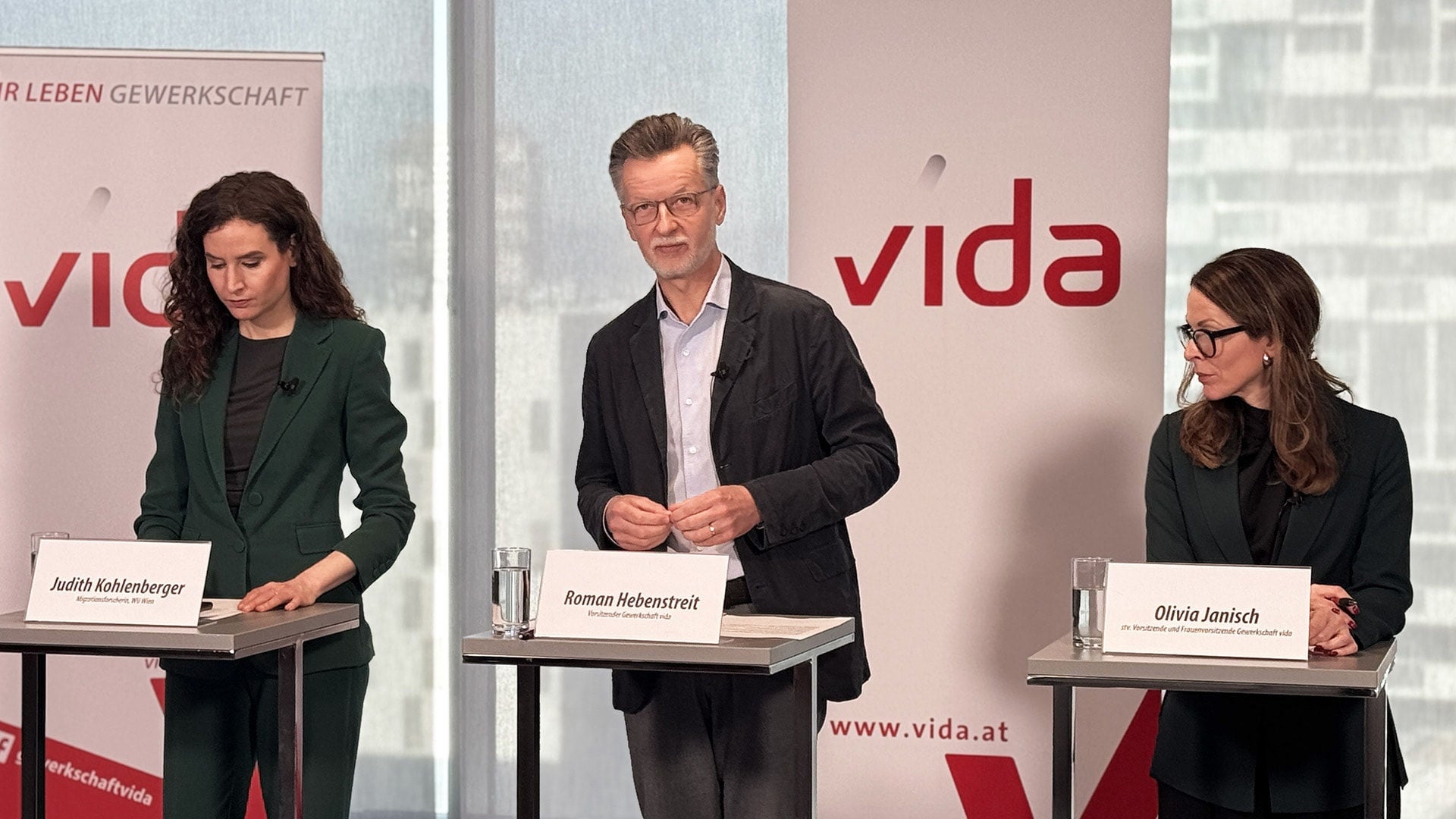
- Roman Hebenstreit, Chairman of the vida trade union
- Olivia Janisch, Deputy Chairman of the Board of Directors Chairwoman and Women's Chairwoman of the trade union vida
- Judith Kohlenberger, Migration Researcher, Vienna University of Economics and Business
Download
Open questions in the Skilled Workers Strategy
- What specific qualifications are required?
- What working and living conditions does Austria offer immigrant skilled workers?
- Who bears the costs for training, integration and social infrastructure?
- And how can labour migration be organised in such a way that no new dependencies arise?
Without answers to these questions, there is a risk of a policy that plugs personnel gaps in the short term, but exacerbates social problems in the long term.
Staff shortages often homemade
Especially in those industries that complain particularly loudly about labor shortages, it becomes clear that the problem often lies in working conditions. Where wages stagnate, working hours get out of hand and burdens increase, employees turn their backs on the industry. Low wages and precarious residence conditions do not keep skilled workers in the country – they generate high fluctuation and further exacerbate the shortage of personnel.
Precarious residence permits promote exploitation
The close coupling of residence permits and employers is particularly problematic. Anyone who automatically loses their right of residence when they lose their job will find themselves in a relationship of dependency. Those affected often do not dare to report grievances, demand their rights or organize themselves in trade unions. This creates a system that promotes exploitation and, in the worst case, legalizes modern forms of human trafficking.
Responsibility instead of filling gaps
A state that actively recruits workers from third countries bears responsibility: for fair working conditions, social security, legal protection and real future prospects. Labour migration must not be reduced to simply "plugging personnel gaps". Sustainable solutions require good work, secure residence permits and comprehensive integration services – from language acquisition to affordable housing.
Fair labour migration benefits everyone
The trade union vida and migration researcher Judith Kohlenberger use concrete examples to show how the recruitment of skilled workers can be designed in a socially just way. Where labour and human rights are observed, everyone benefits: the immigrant skilled workers, the companies through stable employment conditions – and society as a whole through better integration and long-term securing of skilled workers.