vida starts the autumn wage rounds
vida presents demands for railway workers, truck and bus drivers, trade workers and cleaners.
Autumn wage rounds
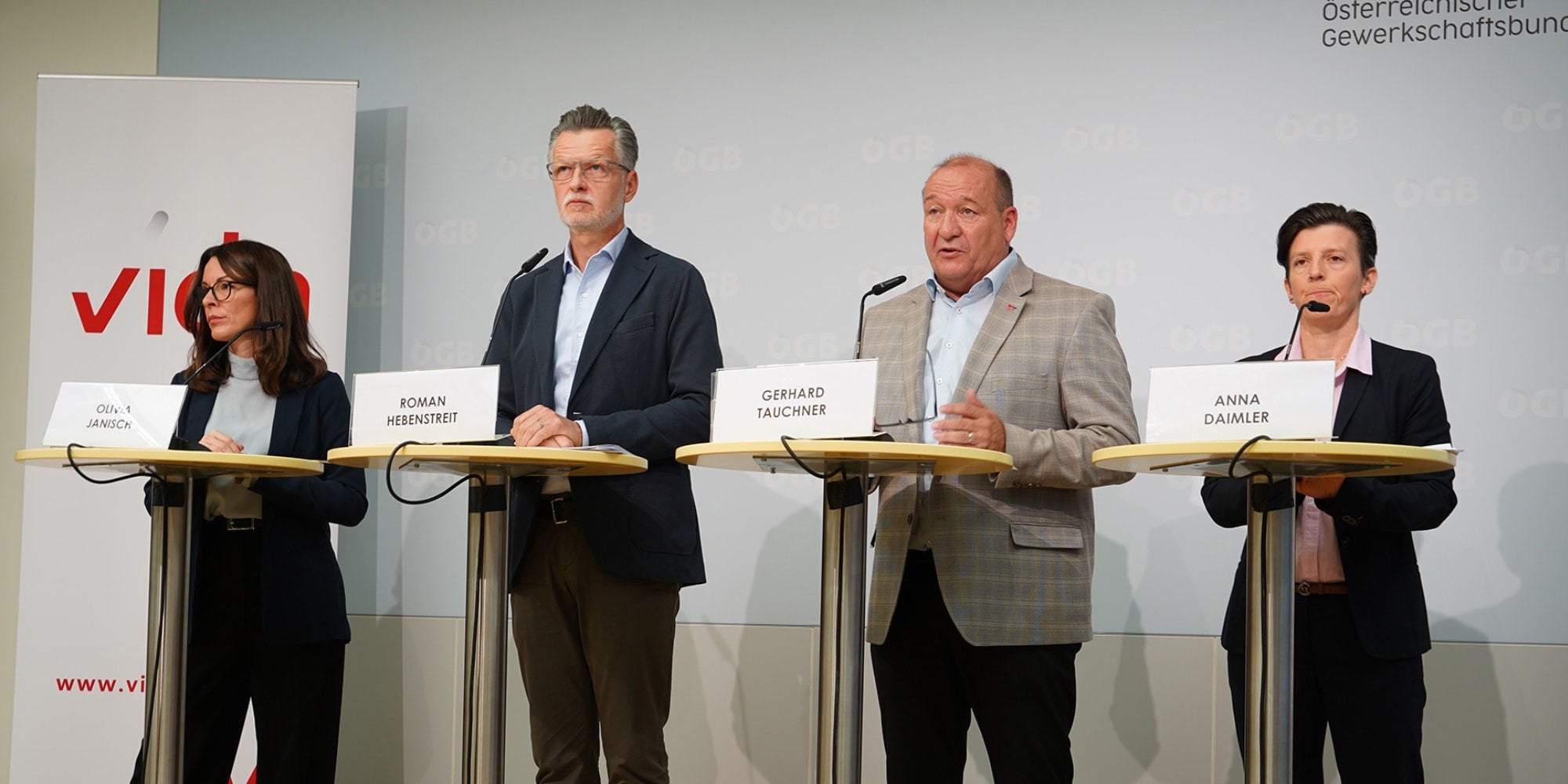
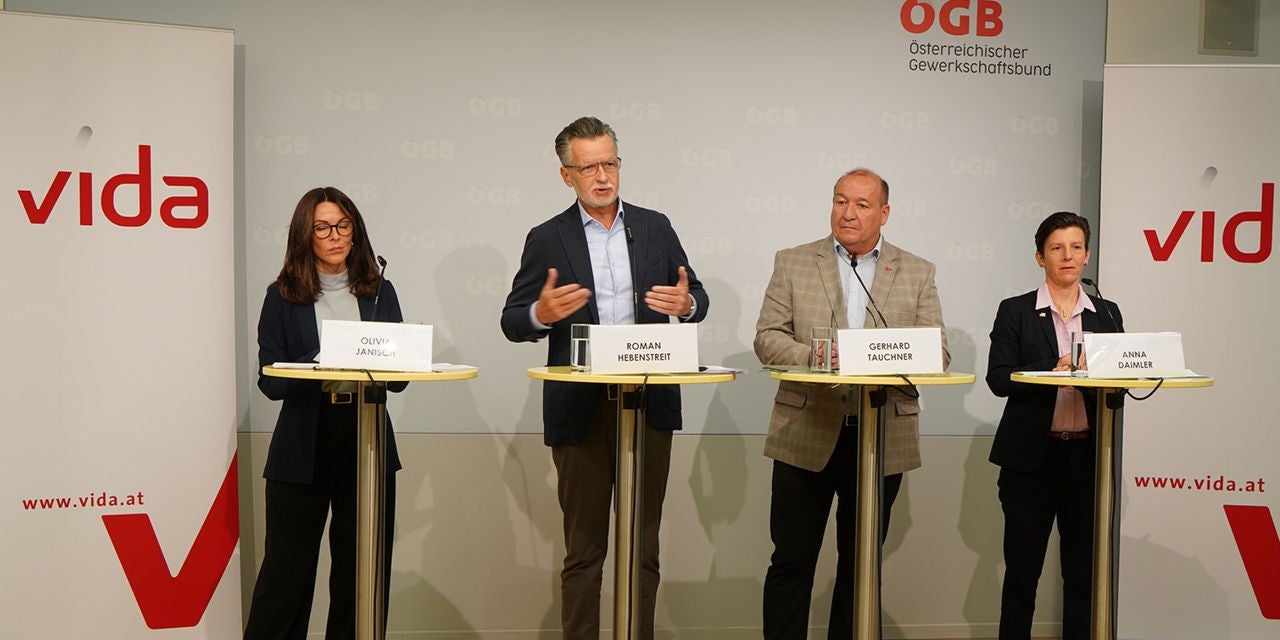
For the collective bargaining negotiations starting in October and November in the railway, road, trade, warehousing and cleaning sectors, the vida trade union is demanding compensation for rolling inflation and compensation for "increased workloads". "The wage increases can by no means be based on the current monthly inflation rate alone or on the predicted economic downturn," vida boss Roman Hebenstreit told journalists on Monday.
Traditionally, the union only wants to announce concrete wage demands at the beginning of the collective bargaining negotiations. In view of the two-year collective bargaining agreement for the metalworkers last year, the focus of this year's autumn wage round is on other sectors, such as trade and rail. The expected decline in economic output in Austria in the current year and the second year of recession in a row will probably complicate the collective bargaining negotiations, as the Austria Press Agency (APA) reports.
Rolling inflation on average 4.6 percent
In September, the inflation rate amounted to 1.8 percent, according to the flash estimate of Statistics Austria. The economic researchers at Wifo and IHS forecast consumer prices (CPI) to rise by 3.1 and 3.0 percent respectively in 2024. Depending on the start of the collective bargaining negotiations, the rolling inflation of the past twelve months, which serves as a basis for negotiations, varies. For October 2023 to September 2024, Wifo economist Josef Baumgartner estimates inflation of 3.8 percent. The trade union vida referred to a rolling inflation of 4.6 percent, without naming a period.
Increase in collective bargaining minimum salaries
The trade union vida is insisting on a noticeable increase in the minimum salaries for collective bargaining in the sectors to be negotiated. "With current starting wages of around 2,000 euros gross per month, there is still a lot of catching up to do in view of the massive increase in the cost of living in some industries in the last two and a half years," Hebenstreit said at a press conference with other vida officials in Vienna. The government's anti-inflation payments have "fizzled out", including the prices for rents and food remain "extremely high", criticised the vida boss. The minimum full-time salaries under the collective agreement currently amount to 2,000 gross per month (around 1,600 euros net) in the cleaning industry, between 1,923 and 2,591 euros gross in the railway industry, 2,025 euros gross for commercial workers, 2,043 euros gross in freight transport and 2,174 euros or 2,773 euros gross (drivers) for private bus companies.
Cleaning industry
The collective bargaining negotiations in the cleaning industry - 54,000 employees, two thirds of whom are female - will start as early as Tuesday, October 8. In addition to a "wage increase above inflation", the deputy head of vida, Olivia Janisch, is calling for cleaners to be guaranteed every other weekend off and the timely announcement and adherence to duty rosters by employers.
Railway workers
After a 24-hour warning strike, the railway employers and the union agreed on a two-year collective agreement at the end of 2022. The collective bargaining negotiations for the 55,000 railway employees, 16 percent of whom are female, will start this year on October 22. For the chairman of the vida railway department, Gerhard Tauchner, the collective agreement must be "more than inflation". He assumes that there is an "insight among the companies" and that there will be "no escalations". Tauchner also referred to the tense personnel situation in the railway industry. "The acute shortage of personnel in the railway sector is leading to more than 4.5 million overtime hours and numerous delays for rail passengers."
Goods
The first round of collective bargaining for the approximately 50,000 employees in the freight transport industry, 14 percent of whom are female, will start on November 11. No fixed date has yet been set for the private bus companies. "Only an improvement in working conditions in combination with an increase in minimum wages will secure the need for labour in the long term," said vida Secretary General Anna Daimler. For the desired mobility turnaround, including the expansion of public bus transport, "thousands of drivers are still needed".
Trade workers
The collective bargaining negotiations for the approximately 150,000 employees in the retail warehousing, 54 percent of whom are female, will start on November 24. In this industry, too, employers must counteract the demand for labor with "higher wages and better working conditions," said vida deputy boss Janisch.