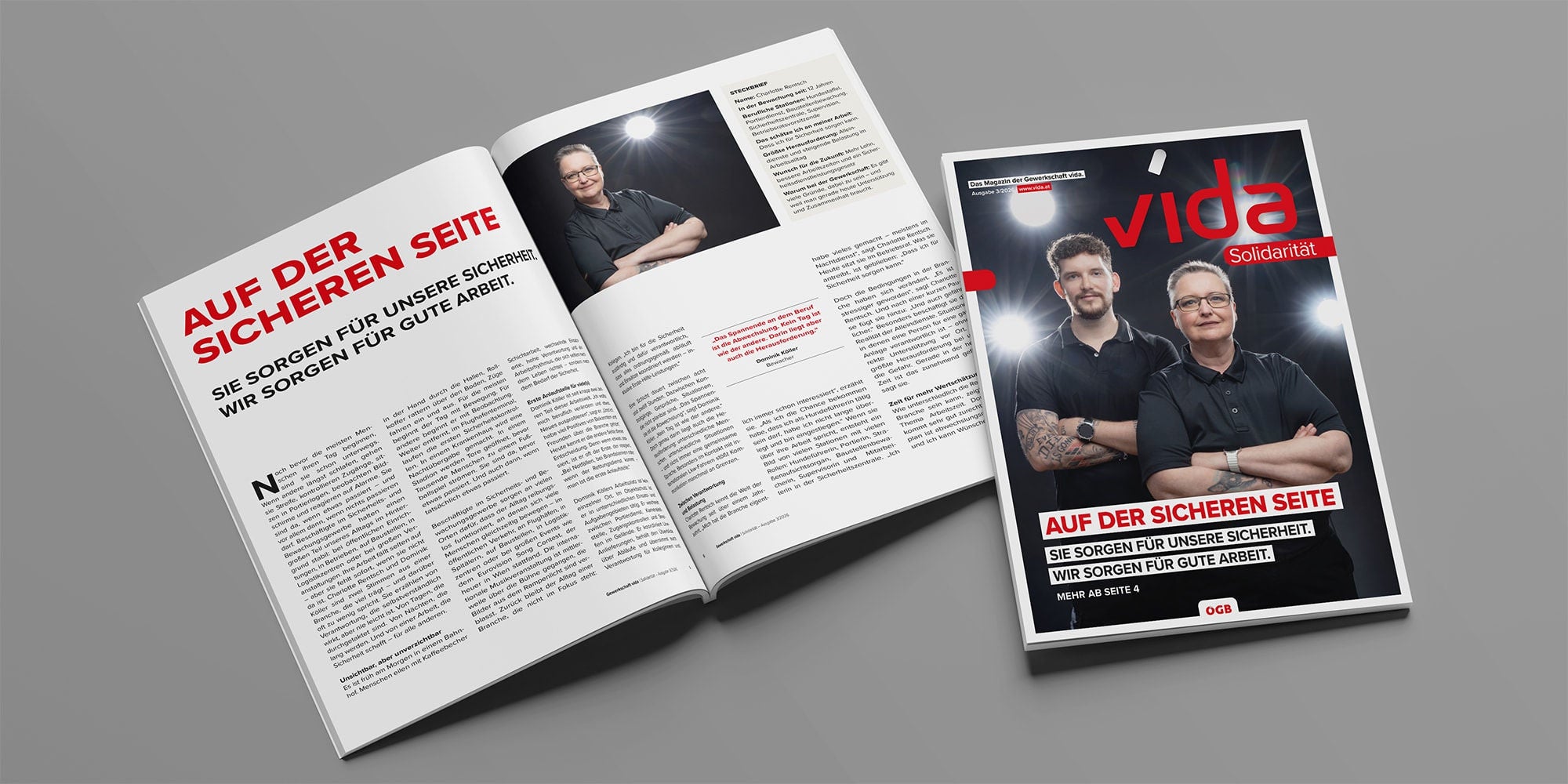
On the safe side
They ensure our safety - we ensure good work.
Cover Story
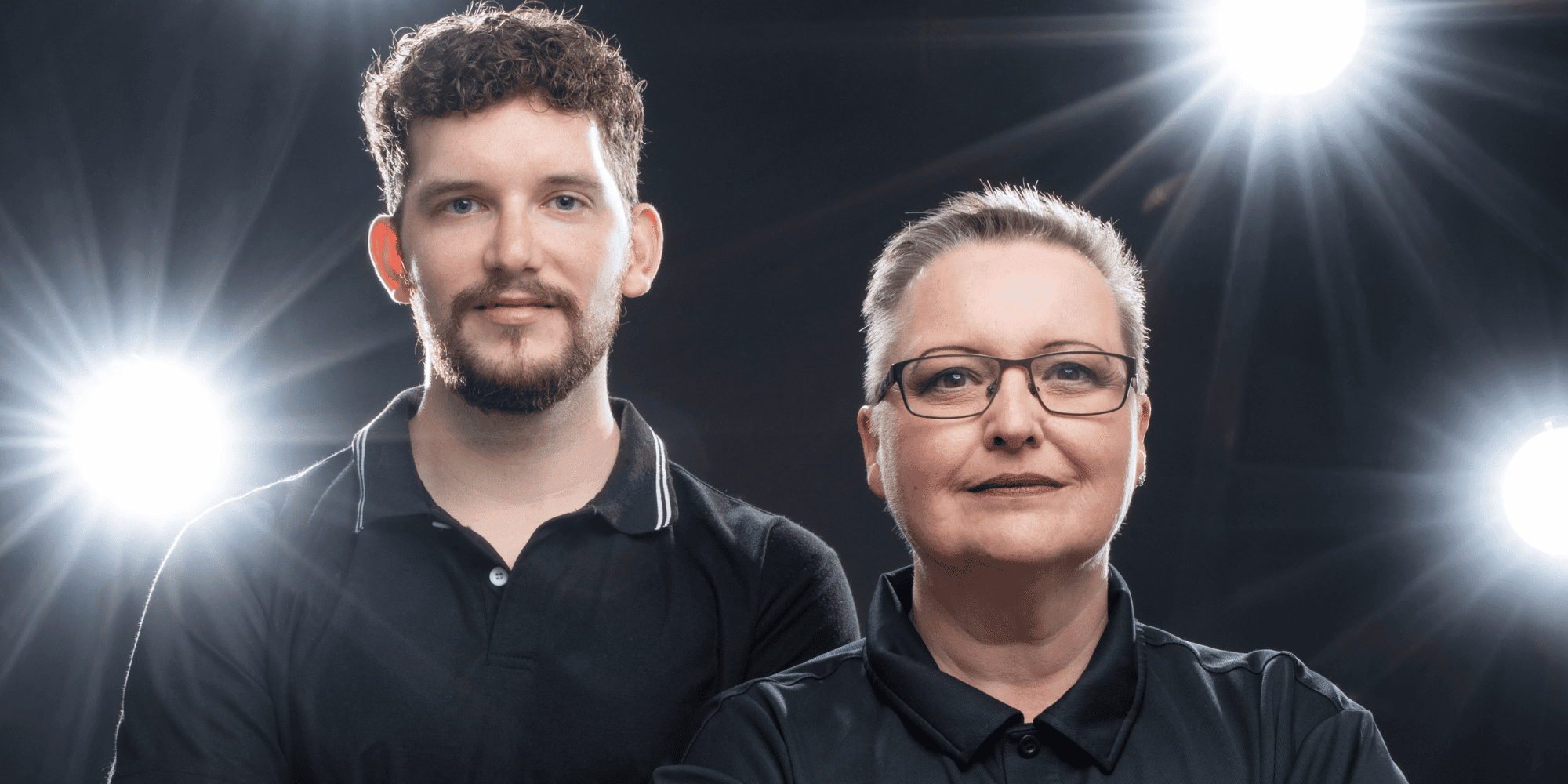
Even before most people start their day, they are already on their way. When others have long been asleep, they patrol, control access, sit in porter's lodges, watch screens and react to alarms. They are there when something happens – and especially when nothing is allowed to happen. Employees in the security and security industry keep a large part of our everyday life stable in the background: at public institutions, in companies, on construction sites, in logistics centers or at large events. Their work is rarely noticeable – but it is immediately missing when it is not there. Charlotte Rentsch and Dominik Köller are two voices from an industry that carries a lot – and often talks too little about it. They talk about responsibility that seems self-evident, but is never easy. Of days that are clocked through. Of nights that get long. And of work that creates security – for everyone else.
Invisible, but indispensable
It's early in the morning at a train station. People hurry through the halls with coffee mugs in their hands, wheeled suitcases rattle across the floor, trains drive in and out. For most people, the day begins with exercise. For others, it begins with observation. Further away, in the airport terminal, the first security checks are underway. In a hospital, a night handover is made. In a stadium, gates are opened before thousands of people flock to a football match. They are there before anything happens. And even if something actually happens. Employees in the security and security industry ensure that everyday life runs smoothly in many places where many people move around at the same time – on public transport, at airports, in hospitals, on construction sites, in logistics centres or at major events such as the Eurovision Song Contest, which took place in Vienna this year. The international music event has now taken place, the images from the spotlight have faded. What remains is the everyday life of an industry that is not in focus: shift work, changing locations, a high level of responsibility and a work rhythm that is rarely based on life – but on the need for safety.
First point of contact for many
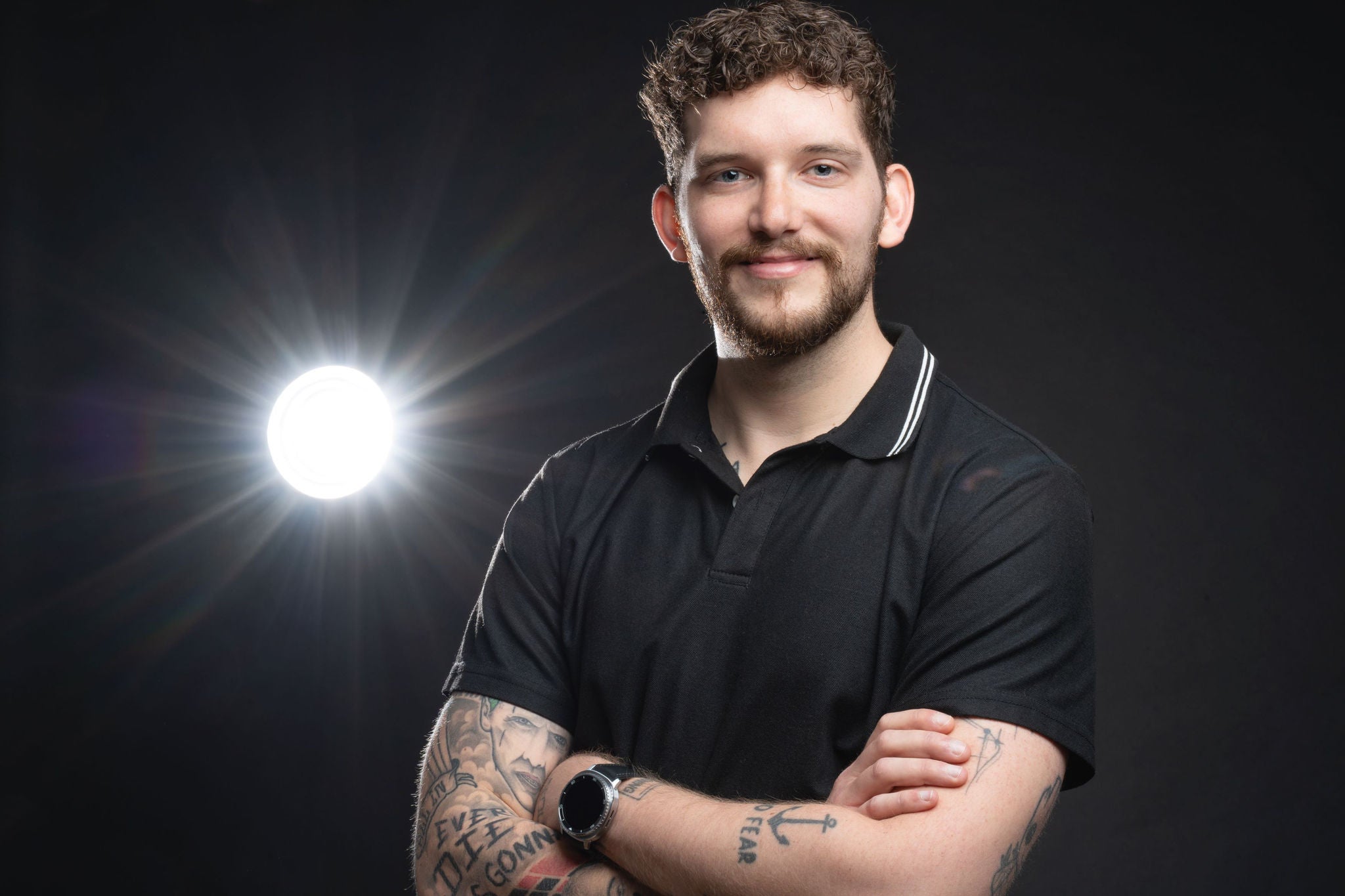
Dominik Köller has been part of this working world for almost two years. "I wanted to change careers and try something new," he says. "And I've heard a lot of positive things about the industry from acquaintances and friends." Today he knows the other side of this decision. Because when something happens, he is often the first to react. "In emergencies, fire alarms or when the emergency services come - you are the first point of contact." Dominik Köller's workplace is not a single place. In property protection, he is active in various areas of application and task. He alternates between porter service, camera control center, access controls and patrols in the area. He coordinates truck deliveries, keeps track of processes and also takes responsibility for colleagues. "I am responsible for safety and responsible for ensuring that everything runs properly and that operations are coordinated - including first aid services." A shift lasts between eight and twelve hours. In between, patrols, conversations, situations that cannot be planned. "The exciting thing is the variety," says Dominik Köller. "No two days are the same." But that's exactly where the challenge lies: different people, different situations – and not always a common language. Especially in contact with international truck drivers, communication sometimes reaches its limits.
Between responsibility and burden
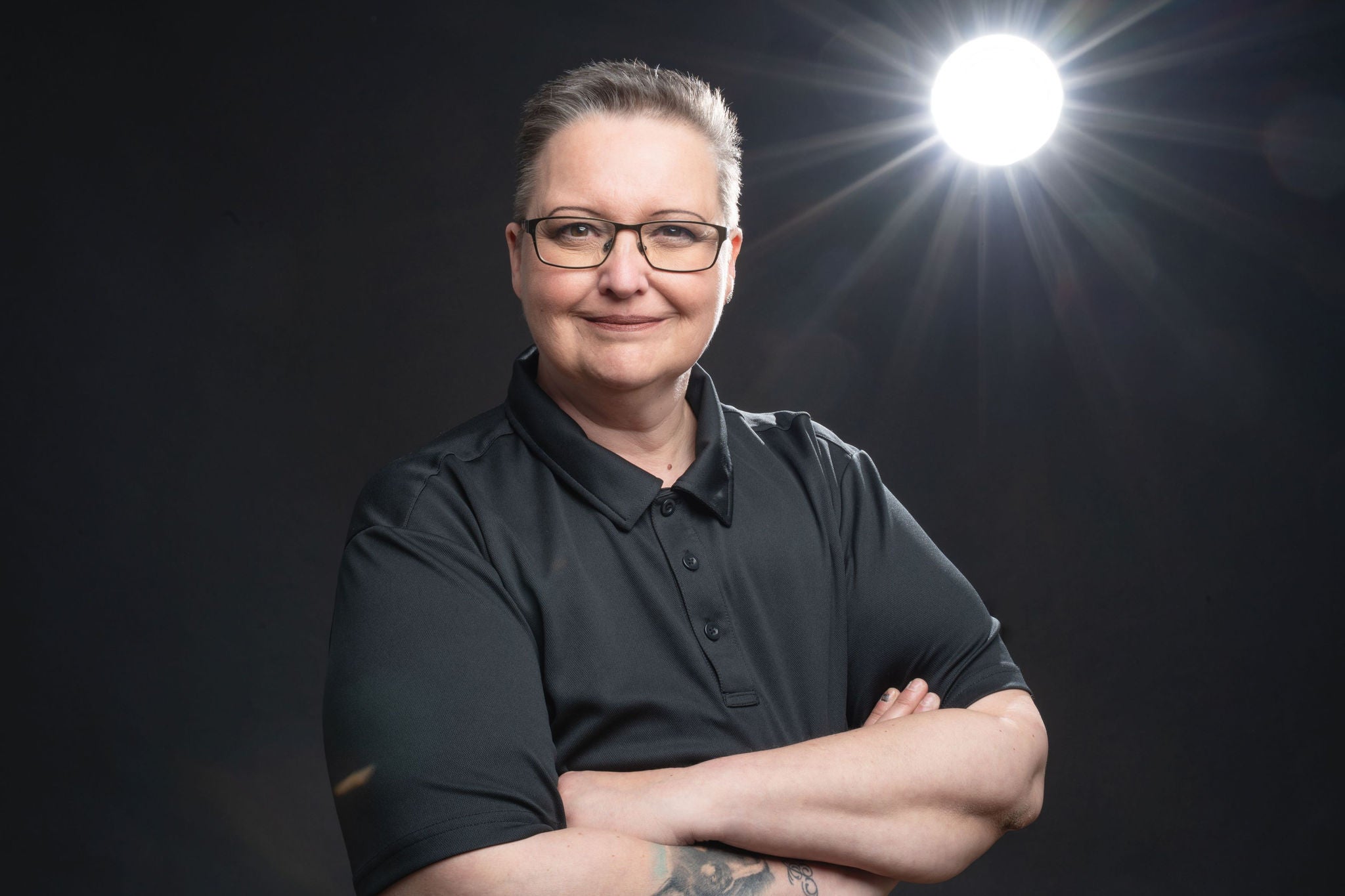
Charlotte Rentsch has known the world of security for over a decade. "I've always been interested in the industry," she says. "When I got the chance to work as a dog handler, I didn't think twice and got in." When she talks about her work, a picture emerges of many stations with many roles: dog handler, porter, road supervisor, construction site guard, supervisor and employee in the security center. "I did a lot of things – mostly on night duty," says Charlotte Rentsch. Today she sits on the works council. What drives her has remained: "That I can provide security." But the conditions in the industry have changed. "It has become more stressful," says Charlotte Rentsch. And after a short pause, she adds: "And also more dangerous." She is particularly concerned with the reality of lone services. Situations where one person is responsible for an entire plant – without direct on-site support. "The biggest challenge for us is the danger. Especially in this day and age, this is increasingly dangerous," she says.
Time for more appreciation
How different the reality in the industry can be is shown when it comes to working hours. Dominik Köller gets along very well: "The duty roster is varied, and I can bring in wishes for days off." Charlotte Rentsch sees it differently. "It happens again and again that you have to step in on your day off," she reports from her own experience and as a works council member. Short-term changes. Services of twelve hours. Jumping in on days off. Planning that often only arises in retrospect. "It's not easy to really plan your free time." When it comes to wages, too, two perspectives collide – and yet a common assessment. Dominik Köller formulates cautiously: "There is potential for improvement - so there is still room for improvement." He would like to see better, more modern framework conditions for his industry. Charlotte Rentsch is more explicit: "Our work is underestimated. Many do not see the responsibility we bear. The earnings don't match that – it should definitely get better." The two expect one thing above all from the next collective agreement negotiations: a decent wage increase. "At least a compensation for inflation," emphasizes Dominik Köller. "Improvements beyond this would of course be very desirable."
Thrown in at the deep end
In the works council office, Charlotte Rentsch is there for the concerns of her colleagues – for their concerns. "Many contact me about salary questions or problems with the duty roster. Or because I am supposed to accompany them to discussions with superiors," reports the works councillor. Again and again, it is also about entering the profession itself. "Many are thrown in at the deep end," she says. "There is too little school enrolment. And often too little clarity about what you are actually allowed to do – and what you are not allowed to do." There are many black sheep in the industry who damage the reputation. For Charlotte Rentsch, it is therefore clear that a security service law is needed that regulates training, tasks and standards in a binding manner. "This benefits everyone - the employees, the companies and society."
Strong support for everyone
In all of this, one factor plays a central role again and again: support. "The works council always has an open ear – you are not left alone," says Dominik Köller. "You get tips and support to be able to cope well with everyday work with its challenges." But the employees themselves are also called upon. "We can make suggestions to make the work even better," he says. The trade union is also an important anchor for Dominik Köller. "For me, being a member of the union means more security, better working conditions and, above all, knowing that someone is behind me." This is particularly crucial in collective bargaining negotiations, adds Charlotte Rentsch. "Only if you perform together can you really change something." There are also many good reasons for them to be members of the union. "Whether social funds or benefits at many companies - especially in this day and age, any financial support is important," she says. When the two guards look into the future, the tone becomes personal. "More modernization to make workflows more efficient," Dominik Köller would like to see. "So that we can do our job optimally and concentrate more on the actual safety work." In addition to a security service law, Charlotte Rentsch would like to see more wages, better working hours and more appreciation for what employees achieve. "That would change a lot - including the attractiveness of the industry."
Security is not a coincidence
Security often seems self-evident – but it is not. It arises in shifts, in patrols, in concentrated glances at screens, in conversations with people you don't know – and in decisions that often have to be made immediately. Charlotte Rentsch and Dominik Köller are representative of many who do just that every day. Her work keeps things stable that others take for granted. And it shows that those who provide security need security themselves – in service, in planning, in life. So that an often invisible work becomes a visibly recognized one.