This is the vida chief negotiator
As a collective bargaining negotiator, Michaela Guglberger is resolutely committed to the rights of employees in the social sector.
SWÖ-KV
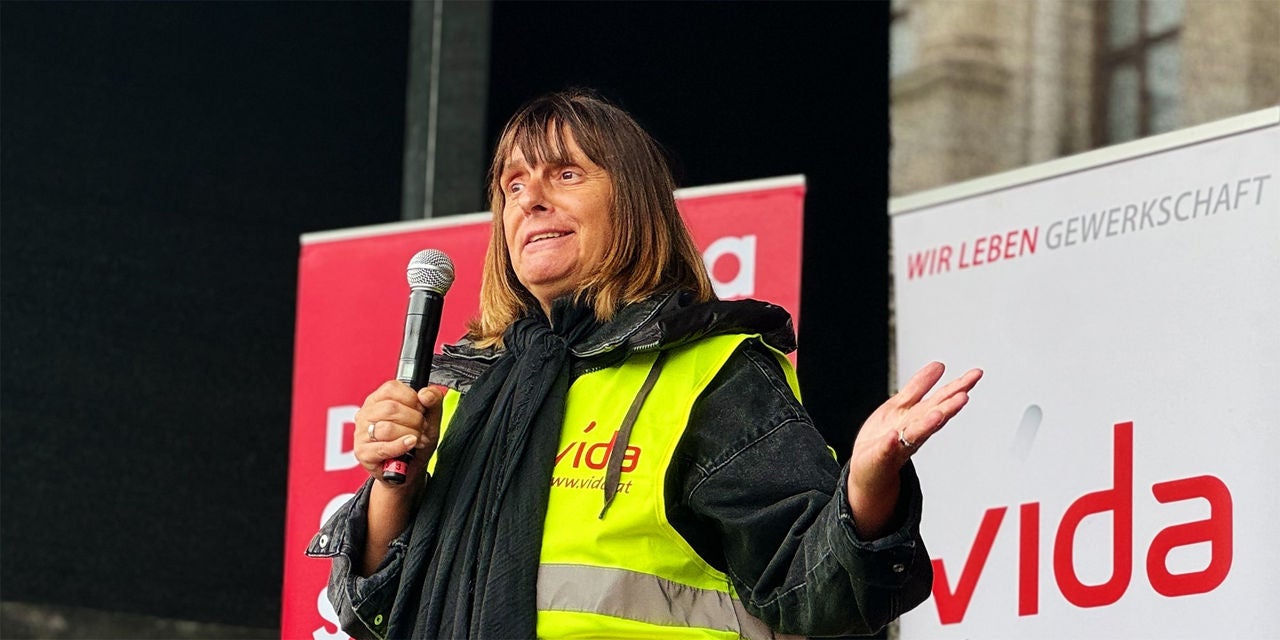
In her role as vida department secretary for social services, she fights every day for better working conditions, higher wages and more free time for employees.
Michaela Guglberger began her professional career in the social sector, more precisely at Volkshilfe Wien in mobile care. There she experienced first-hand the injustices that many of her colleagues were exposed to. These experiences led her to the works council office for the first time. And after a short time, Michaela Guglberger herself was elected as the chairwoman of the works council. In one fell swoop, she was the representative for 800 employees. Since 2002, she has been working for the trade union vida as a department secretary.
"I have a sense of injustice. And as long as that's there, I'm working in the right place at vida."
Small steps to a successful collective agreement
A key event for employees in the social sector was the implementation of the SWÖ collective agreement, then still known as BAGS, whose 20th anniversary was celebrated this year. With a competent lawyer at her side, the trade unionist often sat at the negotiating table into the night - opposite her were the representatives of the Austrian social economy. Until an agreement was finally reached in July 2004.
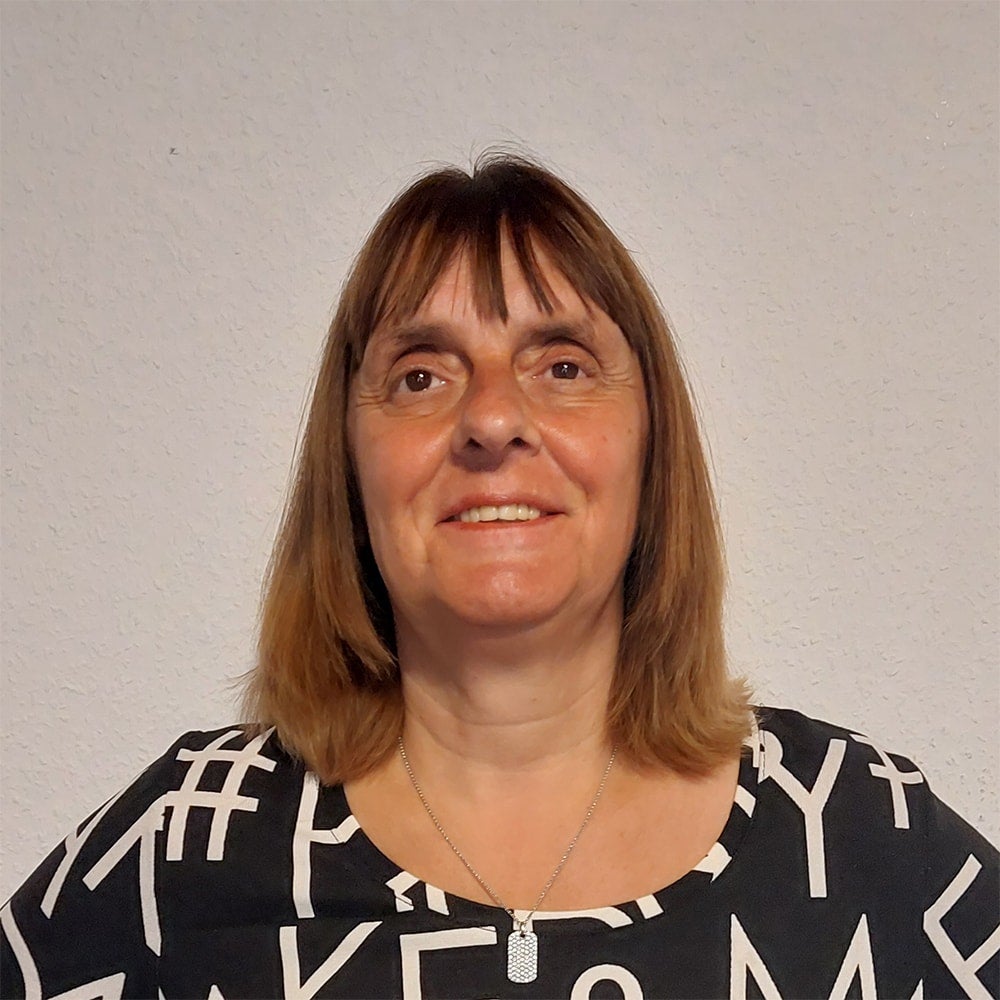
"Sometimes it takes a lot of blows to make visible progress. But in the end, cracks appear in the system that make change possible."
Compromise is an essential element of social partnership. Instead of literally reaching for a sledgehammer, she works with a small "hammer", Guglberger explains her strategy.
Reduction of working hours, wage increase and relief
The trade union secretary describes the introduction of the 37-hour week in all areas of the social economy as one of her greatest achievements. At the same time, she is convinced that the reduction in working hours in the social sector has not yet reached the end. With 35 hours a week, she is already heading for the next milestone together with colleagues from the other sub-unions. Michaela Guglberger also likes to highlight the last qualifications for the kindergarten assistants: "There we have finally managed to enforce a minimum wage of over 2,000 euros".
In addition to the reduction in working hours and earnings, the vida trade unionist is particularly concerned about relieving the burden on employees. Staff shortages are sometimes an enormous problem in childcare facilities, which increases the pressure on the existing workforce and increases the burden.
Upcoming negotiations
Michaela Guglberger is calling on politicians to provide more support for employees in social services. Their demands are clear: uniform staffing ratios, more staff and sufficient funding are needed to ensure high-quality social work. Michaela Guglberger is a strong voice for employees in the social sector. Persistently, but always solution-oriented, she is once again entering the negotiations for better working conditions in the social economy this autumn. Their work is proof that it is possible to bring about change – even if it is sometimes only done step by step.
SWÖ-KV
The Collective Agreement for the Austrian Social Economy (SWÖ) and the associated statutes cover around 130,000 employees in the private social and health sector. The proportion of women is over 70 percent. The part-time rate is also around 70 percent. Especially in the mobile sector (part-time quota approx. 90 percent), the proportion of women is particularly high and full-time jobs are the absolute exception.