The Collective Agreement of the Social Economy is 20 years old
On the occasion of the 20th anniversary of the Collective Agreement of the Austrian Social Economy (SWÖ Collective Agreement), numerous guests of honour commemorated its creation.
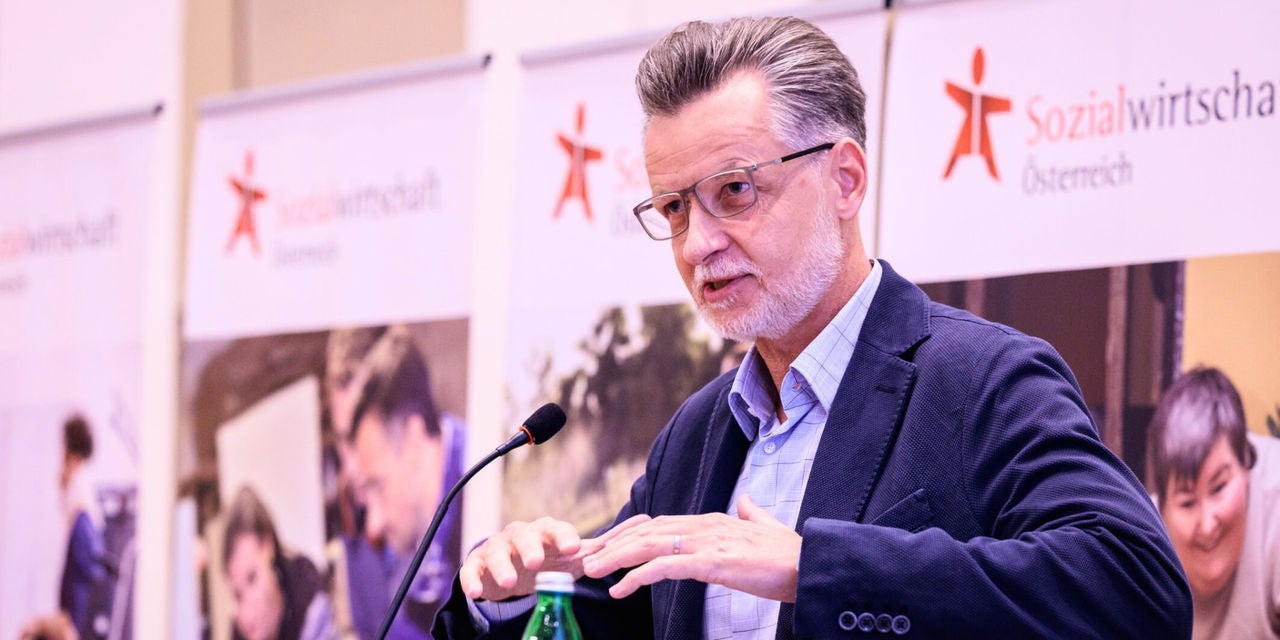
"Since its introduction two decades ago, the Collective Agreement of the Austrian Social Economy has significantly shaped and greatly improved working conditions for employees in the private social and health sector ," says Federal Minister Rauch, assessing the past few years. The 20th anniversary is a good opportunity for him to highlight these successes, but also to acknowledge the challenges facing the social economy. "May the collective agreement continue to be a strong foundation for fair and just working conditions in the coming years," said Rauch in his speech.
Hebenstreit: Dialogue is essential
Roman Hebenstreit, chairman of the trade union vida, focuses on dialogue as an essential component of social partnership: "Dialogue is a central element of social partnership. Only through continuous exchange and cooperation between employee representatives and employers ' associations can sustainable solutions be found that meet both the needs of employees and the requirements of companies . This is particularly evident in the social economy." The challenges facing us – be it the need for skilled workers, demographic development or the increasing demands on the quality of services – require "joint efforts and innovative solutions" for Hebenstreit and makes it clear: "This is the only way we can master the challenges of the coming years and shape a future worth living for everyone."
"Sustainable solutions can only be found through continuous exchange and cooperation between employee representatives and employers' associations ."
The anniversary is also a reason to celebrate for the chairwoman of the GPA trade union: The introduction of the collective agreement in 2004 was a milestone in the history of the social economy in Austria, also because it closed a scandalous gap in the world's densest network of collective agreements. It has not only improved working conditions for tens of thousands of employees , but has also contributed to a more socially just society ."
KV stands for solidarity
Teiber also emphasizes with regard to the future: "The SWÖ collective agreement is more than just a pack of paper. It is solidarity cast in words and stands for the tireless efforts of the trade union movement and the joint efforts of the social partners to make the world of work fairer and more humane. In times when the pressure on the social systems is increasing and the need for social services is growing, it is all the more important to constantly work on the further development and attractiveness of the social professions."
For SWÖ Chairman Erich Fenninger, the event is a good opportunity to remind people of the breadth of services offered by the social economy : "SWÖ is the largest – and constantly growing – voluntary representation of the interests of social service providers in Austria and now has more than 600 member organisations with 85,000 employees in about 100 professional groups, many of them work in nursing, disability and social work, child and youth care or in the labour market policy sector." In addition to the breadth of the industry, Fenninger also focuses on the attractiveness of the industry: "We unite companies with services that accompany all people in Austria from birth to the end of life. There is hardly a person in Austria who does not come into contact with us at least once in their lives. No area has seen a greater increase in the number of employees in recent years and no area will have a greater increase in the next few years. This is proof of its attractiveness and promises positive prospects for the future."