Future on rail: Liberalisation on the sidelines
University of Cologne study on EU railway liberalisation: Competition triggers distortions.
Railroad
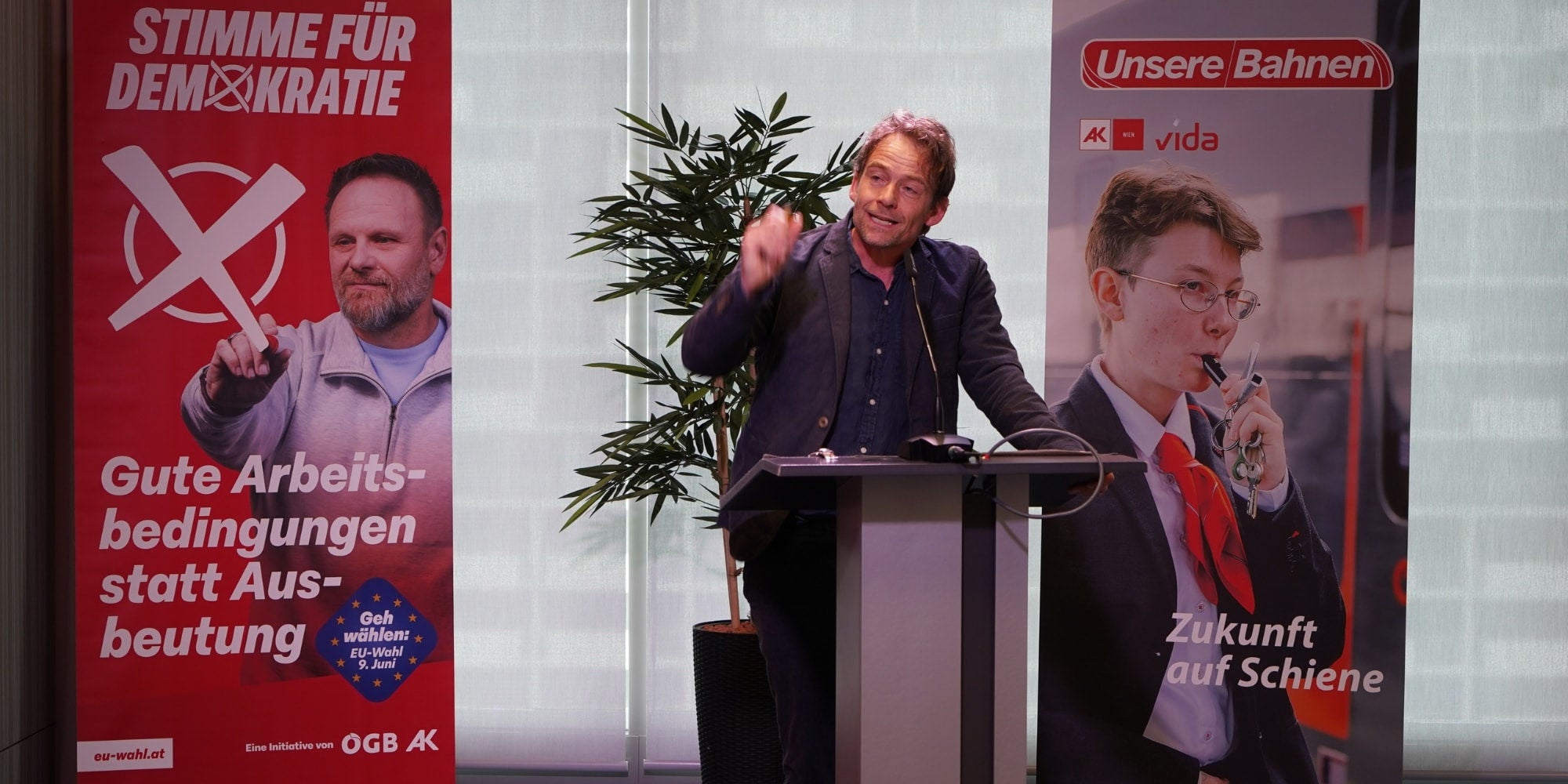
vida trade unionist Tauchner calls for the competitive pressure to be taken off employees. SPÖ MEP Andreas Schieder supports the stop sign against compulsory tendering.
- What are the key elements of a well-functioning railway system?
- How have working conditions in the railway industry developed?
- What do we need for affordable mobility on the rails?
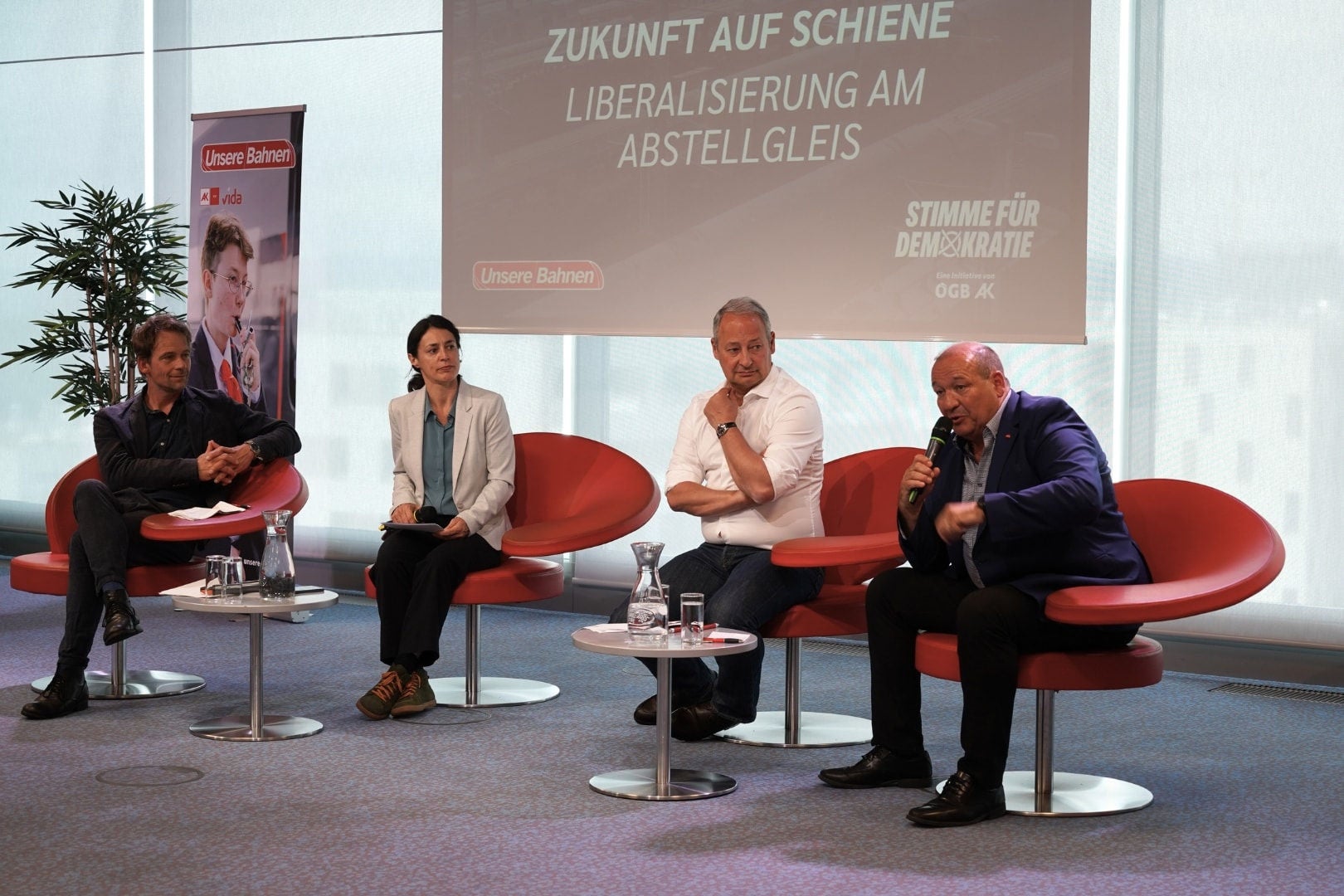
The initiative "Unsere Bahnen" and the trade union vida had invited to a presentation of the summary paper of a new study by the University of Cologne on twenty years of EU railway liberalisation in Vienna, followed by a panel discussion.
Based on his studies, study leader Tim Engartner, Professor of Social Sciences at the University of Cologne, came to the conclusion: "Liberalisations, privatisations and deregulations in other sectors of public services of general interest indicate that the supposedly invigorating power of competition is actually more likely to trigger distortions. The goal pursued by the EU Commission, according to which railway companies should act in competition in a market- and profit-oriented manner, fails to recognise the numerous recognised special features of the rail transport system, such as train path allocation or an integrated timetable."
"Without a technically functioning, attractively priced and nationwide rail system, the shift of traffic to rail as one of the central decisions for the European Green Deal cannot be implemented. If we fail in the transport turnaround, the steadily growing car traffic, the unrelenting air traffic and the globalized container shipping will continue to pave the way for global warming and bring us ecological downfall."
"While the provision of services by the state was once constitutive of the state, a significantly increased use of private services for the performance of formerly public services has also been observed in the railway sector for a quarter of a century. The expansion or strengthening of market forces implemented with the PSO Regulation 2016/2338 has the consequence that the environmental, economic and social policy instruments of a sustainable railway policy are being undermined," says University Professor Engartner, who does not leave a good hair on the EU rail liberalisation policy.
Against liberalisation and compulsory tendering
"The future belongs to rail transport! After all, a well-developed public rail system can make an enormous contribution to the mobility of all people, to combat climate change and to the modern industrialisation of Europe. To this end, the political framework must be set at EU level. We want to put an end to the tax advantages for road and air transport and invest heavily in rail infrastructure. We will put up a clear stop sign against liberalisation and compulsory tendering, because that would be bad for travellers and employees," said Andreas Schieder, SPÖ MEP and member of the Transport Committee in the EU Parliament, critical of the EU Commission, but nevertheless optimistic about the future of the railways.
Enormous pressure on employees
Gerhard Tauchner, Chairman of the Railway Department in the trade union vida, said during the discussion: "In my many years of function as a trade unionist and works council for railway workers, liberalisation in the railway sector has not provided more and better jobs, but has put enormous pressure on employees. In particular, the long working hours in shift work without official control options fuel wage and social dumping in interoperable rail transport. That is why we are calling for uniform European training and safety standards, for example, but also for digital recording of working hours for train drivers, as has long been a matter of course for truck drivers."